Thesis defense - Raphaël Rattier

Designing with timber today: A contribution to the renewal of contemporary architecture
14 Oct 2024
Thesis defense - Raphaël Rattier
  • Search

monday, october 14, 2024
14h00
Jean Duminy Amphitheatre - ENSA Normandie

Raphaël RATTIER will submit his doctoral thesis entitled "Concevoir en bauge aujourd'hui: Contribution au renouvellement de l'architecture contemporaine".

This doctoral thesis was prepared within the ATE laboratory, under the supervision of François FLEURYprofessor, ENSA Normandie, ATE.

Jury members
Erwan HAMARD rapporteur, HDR research engineer, Université Gustave Eiffel, GPEM
Nathalie TORNAY rapporteur, HDR lecturer, ENSA Toulouse, LRA
Valéry DIDELON examiner, Professor, ENSA Normandie, ATE
Antonella MASTRORILLI examiner, professor, ENSAP Lille, LACTH
Steve GOODHEW examiner, professor, School of Art, Design and Architecture University of Plymouth
Estelle MORLÉ examiner, maître de conférence, ENSA Lyon, EVS-LAURE
François STREIFF examiner, consultant architect, PNR des marais du Cotentin et du Bessin

A live webcast of the defense will be available by clicking HERE

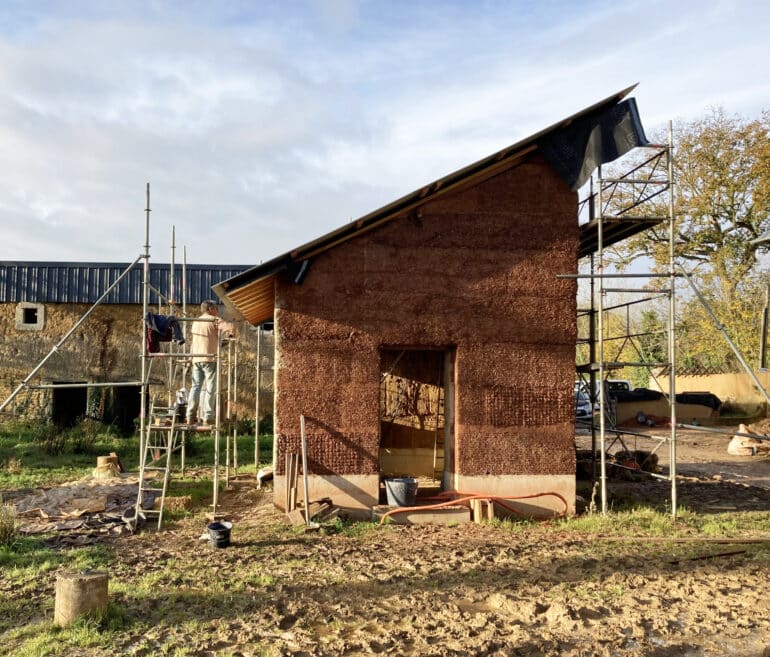
visual: CobBauge experimental prototype, image by Raphaël Rattier

Summary

"This thesis takes a look at recent cob architecture in France and the UK, and how designers are adapting their practices to make cob emerge in their projects. It highlights the technique's potential not only to renew contemporary architecture, but also to transform the design process.

Since the 1990s, one of the most popular raw-earth construction techniques, bauge, has been re-emerging in contemporary architecture, but its forms and construction methods differ from those of traditional architecture. On the other hand, in spite of this revival, logs are struggling to make a real impact on the architectural landscape, and architects are frustrated to hear of "obstacles" to the use of a technique that is out of step with conventional construction. This research proposes a new reading of the available knowledge likely to inform the design and prescription of bauges, while questioning what this knowledge produces in terms of practices and singular architectures.

The corpus we've assembled - inscribed knowledge, testimonials from industry players, and recent buildings - is examined from three angles related to logs: that of phenomena, that of imaginaries, and that of practices. Cross-observations highlight the fragmentation of knowledge required to assess the technique's potential, a renewal of aesthetics in discourse and architectural production, capable of transforming the imaginary of timber more generally, and finally, a reappropriation of the power of the project manager in his conventional action, with a transformation of his relationship to the construction and to those involved on the site. These insights can help us to question certain paradigms of architectural design, at a time when the ecological and social challenges of construction are calling us to reconsider our model of society.

This thesis therefore offers a critical and situated catalog of knowledge about architecture and construction in logs, addressed to those who wish to design with this technique."