New digital resource

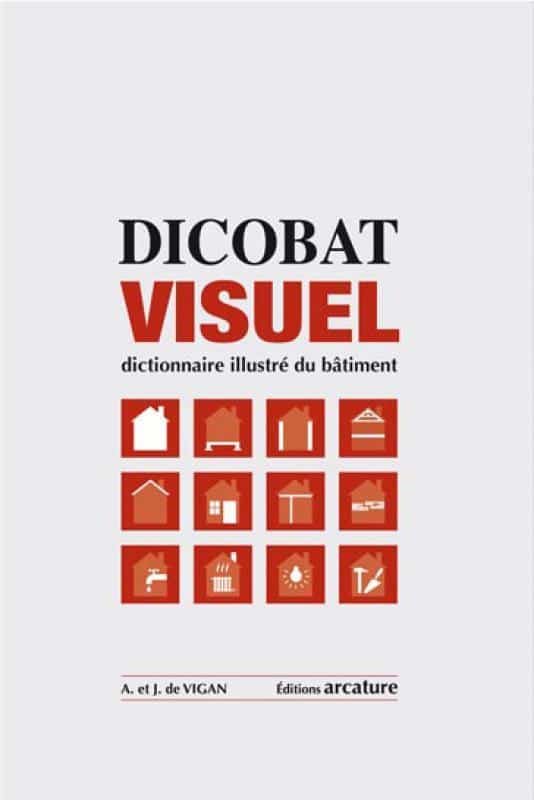
Dicobat

A new digital resource has been added to the document center: Dicobat. What is Dicobat? Dicobat is an illustrated dictionary of building terminology. It's a reliable source that will make your work easier by providing reliable definitions.

Several search modes: by words and thousands of hyperlinks, by Themes, by your History, and now by illustrations thanks to VisuelBAT.

An example of a definition proposed by this resource:

concrete floor

Concrete floors.

The term refers to all types of floors with a rigid, load-bearing framework made of concrete.

FR concrete floor ENG concrete floor

1- Reinforced concrete floors.

We distinguish :

- floor made of reinforced concrete slab reinforced concrete slab, reinforced and cast in situ, either on a formwork which will be removed after hardening by decanting, or on a lost formwork.

Its span does not exceed 4 m, and its thickness is at least 12 cm. Its periphery is embedded in load-bearing walls.

Visual © All rights reserved

Find Dicobat on the local version ofArchiRès in the quick links or HERE

Published on

Cultural activities

Participatory puzzle

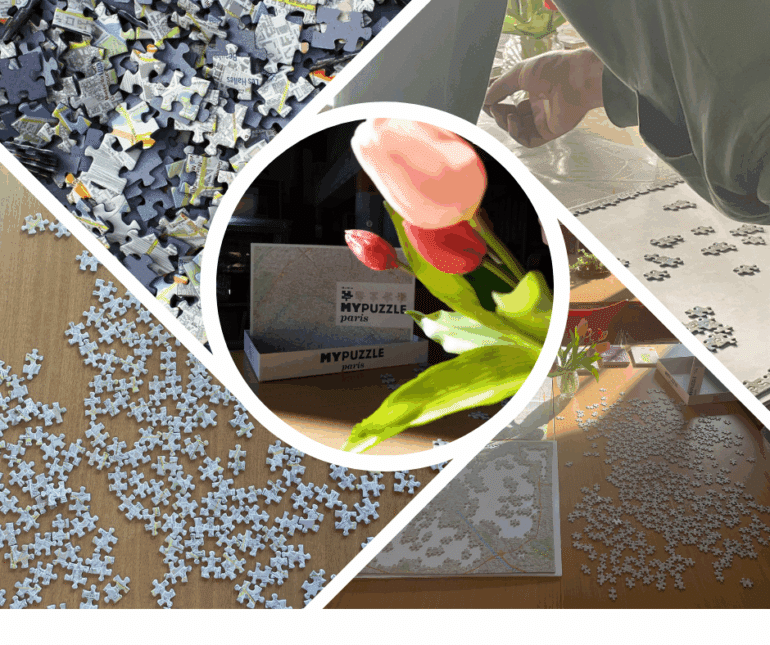
Our participative puzzles have been a great success with users, so we've added some new ones to our collection. This time, it's the IGN map of Paris, scattered like a jigsaw puzzle, that we're inviting you to piece together. The principle remains the same: everyone is welcome. There's no need to spend hours, just put in 1, 2, 3 or more pieces.

It's a way of reconnecting with others by taking part in a collective activity while training your brain in a task that mobilizes many cognitive abilities. What better way to stimulate your ability to pay attention, concentrate, observe, think and remember.


Published on

What's new

Archirès reader account

ArchiRès, the name of the network of ENSA documentalists and also of your documentary catalog, underwent some minor alterations this summer.

From now on, you no longer need to create an ArchiRès reader account and password, as you can now log in using your school ID.

The first time you log on to your account, simply select your school, the Ecole Nationale Supérieure d'Architecture de Normandie, to access your school login and password.

Published on

Summer vacation

CLOSE

The Documentary Center will be closed to the public from June 30 to August 29, 2025.

Reopening on Monday, September 1, 2025 at 1:00 pm.

Published on

Cultural activities

Participatory puzzle

Whether you want to relax or not... the documentary center has installed a participatory puzzle. The principle is simple: everyone is welcome to contribute their piece to the puzzle. No need to spend hours on it, just add 1, 2, 3 pieces, or more if you like. For this first puzzle, the choice fell on the city of Le Havre and the cultural building Le Volcan by Brazilian architect Oscar Niemeyer. There's nothing better than a puzzle to help you stimulate your attention, concentration, observation, reflection, memorization, and connect the dots.


Published on

Training our students in AI

Rendez-vous de la pédagogie

On Friday, June 27, 2025, theENSA Normandie documentation centerENSA Normandie "Le rendez-vous de la pédagogie" (The Education Forum) in the renovated premises of the Ateliers du Parc, an event organized each year by Normandie Université.

This day provides an opportunity for COMUE library staff working as trainers to meet and exchange experience and practices.

The theme is "Training students in AI". The University of Caen and the University of Le Havre will provide feedback on the AI training provided in their establishments, and workshops on building training bricks will be offered.

Visual © All rights reserved

ENSA Marseille

The Archirès seminar

Every year, in the first week of July, ENSA librarians disappear from their libraries and meet up at a school of architecture to attend the ArchiRès seminar. This singular event has been taking place since 1969, the year the network of architecture school libraries was born. ArchiRès is therefore the name of the network, the seminar and the common catalog that you can consult on the Internet for your research.

This year, the IMTV (Institut Méditerranéen de la Ville et des Territoires) in Marseille welcomed them to its brand new premises. The theme of the seminar was "Ecological transition: libraries at the heart of social and environmental issues" .

This seminar is an opportunity to exchange practices, review the year's work and joint projects, and take in cultural visits.

Christophe Bonneuil, Jean-Baptiste Fressoz and Jean-Robert Viallet

Favorite book - "Nous avons mangé la terre" (We ate the earth)

We owe our favorite book of the month of May, "Nous avons mangé la Terre", to a virtuous circle.

Jean-Robert Viallet, journalist and film-maker, is the author of the documentary "L'homme a mangé la terre" ("Man ate the earth"). The idea of making this film, which analyzes and denounces the chain of events that led to the current environmental situation, was inspired by the work of Christophe Bonneuil and Jean-Baptiste Fressoz, authors of the book "L'évènement anthropocène, la Terre, l'histoire et nous" ("The anthropocene event, the earth, history and us").

The two historians and the journalist wanted to make available to as many people as possible the iconographic documents, photographs, maps and advertisements unearthed in the archives to illustrate the documentary's themes. The result is a book of images, sometimes shocking or highly visual, explained by captions or commentaries.

We have eaten the Earth... but who will eat us?


Published on

by director Jean-Robert Viallet

A look back at the Arte campus masterclass: "The Anthropocene

In collaboration with Arte campus*, the documentary department and teacher Karima Younsi organized a masterclass with director Jean-Robert Viallet** on the theme of the Anthropocene on April 25, 2025. The event was moderated by journalist and film-maker Anne-Lise Carlo***. It was also broadcast live on Web TV Normandie.

Jean-Robert Viallet presented his work and his documentary "L'homme a mangé la terre" (Man ate the earth), short extracts from which were screened.

This event was a unique opportunity to exchange views with a director committed to climate change issues. We would like to thank the many students, teachers and administrative staff who attended the masterclass.

You can watch the replay on Web TV Normandie in the coming days. Keep an eye on Instagram poledocensa76 for the date.

To pursue this line of thought, the Documentary Department has drawn from its collections a selection of books and DVDs on the themes of the Anthropocene and climate change. To see the list, click HERE


* The Arte campus VOD platform is available on the ArchiRès home page. Log in to your account to access it.

** Jean-Robert Viallet directed the documentaries "L'Homme a mangé la terre", "la mise mort du travail", for which he received the Albert Londres prize, "Etudiants, avenir à crédit" and "Le système Total, anatomie une multinationale énergie". la mise à mort du travail", for which he received the Albert Londres prize, "Etudiants, l'avenir à crédit" and "Le système Total, anatomie d'une multinationale de l'énergie". These documentaries are available on the Arte Campus platform.

***Anne-Lise Carlo is the director of the documentary series "Toxic tour", also available on Arte Campus.


Published on

Masterclass - "The Anthropocene" by Jean-Robert Viallet

April 25, 2025 from 4:00 pm to 6:00 pm - Amphi Jean Duminy.

Jean-Robert Viallet, director of the documentary L’homme a mangé la terre(Man Ate the Earth), will be atENSA Normandie a masterclass on the Anthropocene. The aim of this masterclass, organized in collaboration with ARTE Campus, is both to understand major environmental issues and to address the audiovisual treatment of these crucial topics. The event will be moderated by Anne-Lise Carlo, journalist and director. It is organized in conjunction with Karima Younsi's S4 and S6 sociology classes and the Documentary Department. Jean-Robert Viallet is the author of several documentaries available on Arte Campus via your Archirès account, including L'Homme a mangé la terre (Man Ate the Earth), which echoes the S6 course on "Architecture in the Capitalocene," and La Mise à mort du travail (The Death of Work), which resonates with the S4 course program on "Work, Gender, and Social Classes." This Masterclass is open to the entire School.

Link from your archires account by clicking HERE