8:30 p.m. - Salle du Bailliage de Caux, Cany-Barville
Guillaume Nicolas, lecturer atENSA Normandie doctoral student at ATE, will give a lecture entitled "What future for agricultural farmsteads? ." This lecture is organized on the initiative of the association "Clos-masure, racines et avenir de Caux" (Clos-masure, roots and future of Caux). It will be followed by a debate on the relationship between architectural and landscape forms and agricultural production methods, which are currently at the forefront of national news.
The discussion will continue over a drink offered by the association.
Admission 5 euros (association benefits).
Further information HERE.
Conference presentation
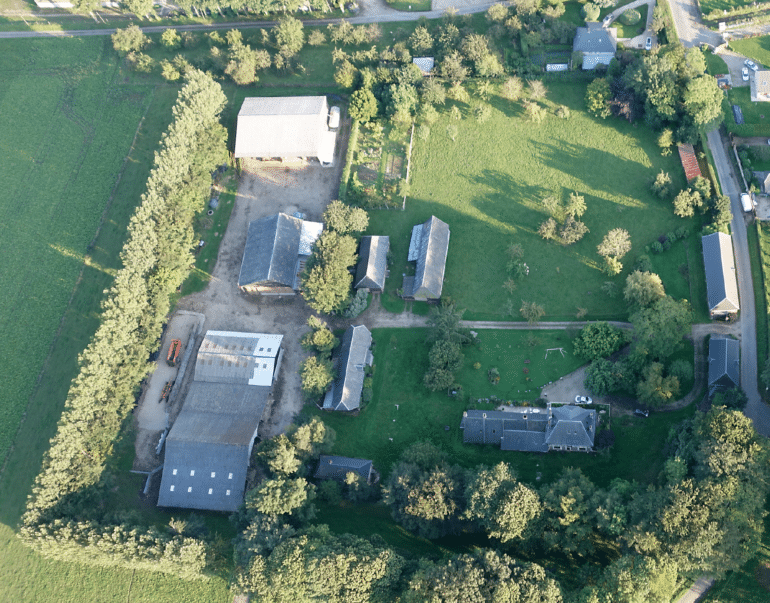
Clos-masures, an architectural landmark in the Pays de Caux, were originally built for farming. Not only were they homes, they were also and above all the site of polyculture-livestock production.
Since the 1960s, their future as a landscape form has been jeopardized by a combination of two phenomena. For a large proportion of them, the clos-masures have lost their agricultural vocation at the same time as the disappearance of a large part of the farming community. They were then transformed into housing, and their tree-lined embankments and old buildings proved hard to resist the expectations of new residents unaccustomed to maintaining such a heritage. As for the other clos-masures which, like the Pays de Caux, have retained their agricultural vocation, the revolution in production methods spurred on by the 1960 agricultural law has completely overturned their initial operation. Tree-lined slopes and old buildings are now threatened with obsolescence due to their clutter and uselessness in the face of mechanization, specialization and farm expansion.
However, the field survey conducted since 2022 by Guillaume Nicolas* on the transformation of agricultural clos-masures shows a more nuanced situation, where this heritage seems to be able to survive by evolving under certain conditions.
The conference will have two aims: firstly, to present the initial results of the research work. Secondly, to discuss with the audience some possible scenarios for the future of agricultural clos-masures.
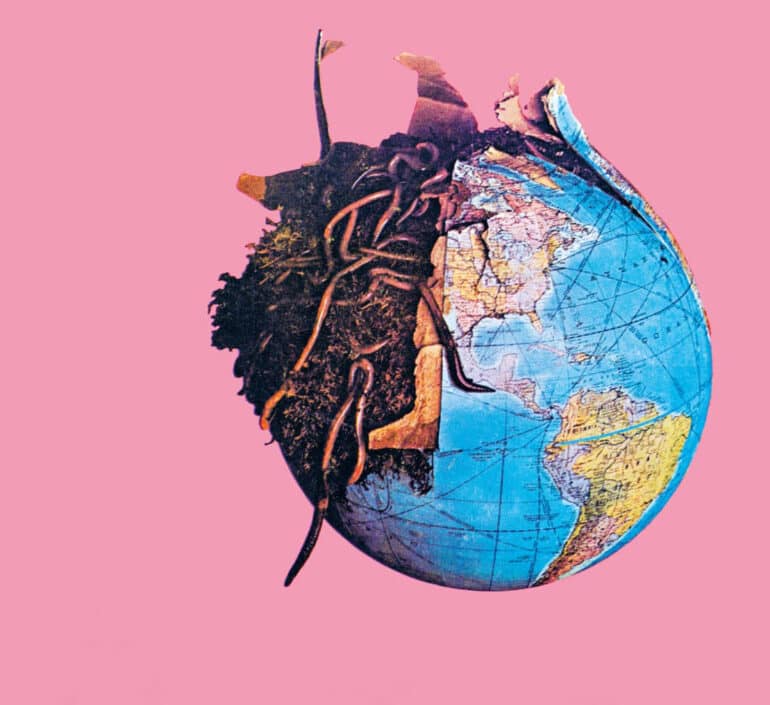
image: poster detail © association " Clos-masure, racines et avenir de Caux ".