Sébastien Cherruet

Publication – <i>Aldo Coutine. Voyage en architecture</i>

The ATE laboratory is pleased to announce the publication, by Terre en vue, of the book Aldo Coutine. Voyage en architecture. This publication is the result of original research conducted by Sébastien Cherruet, a lecturer and researcher at the ATE laboratory.

The publication of this work was made possible by contributions from the Ministry of Culture and the ATE laboratory.

Summary of the book

A graduate of the Tucuman School of Architecture (Argentina), Aldo Coutine worked mainly in France from 1965 until the 2020s, completing a wide variety of projects: modernist towers during the Trente Glorieuses, urban developments and bioclimatic projects after the oil crises, and exceptional commissions such as the Le Mans courthouse. Beyond these singular achievements, Aldo Coutine's work offers a remarkable cross-section of 20th-century architectural history, marked by significant economic changes and a profound renewal of doctrines.

More information on the publisher's website

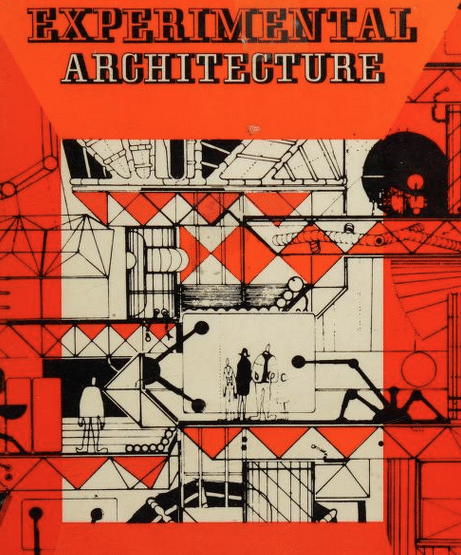
visual: cover of the book AldoCoutine. Voyage en architecture © Terre en vue publishing, 2025.

Published on

Presentation with Léonore Dubois-Losserand, Marie Gaimard, Gilles-Antoine Langlois

Revue <i>transversale</i>

Thursday, March 26, 2026, from 1:30 p.m. to 2:30 p.m., at theENSA Normandie Documentary Center, the editorial committee of the journal transversale, histoire: architecture, paysage, urbain will present the ninth and latest issue, published in December 2025, on the theme of Journeys, Interweaving, Hybridization: A Global History of Architecture and Urbanism.

This issue is coordinated by Léonore Dubois-Losserand, researcher at EVCAU (ENSA Paris-Val-de-Seine), Marie Gaimard, researcher at ATE, and Gilles-Antoine Langlois, researcher at EVCAU (ENSA Paris-Val-de-Seine).

For the first time, the cross-disciplinaryreview isco-produced in partnership with ENSA Paris-Val-de-Seine,ENSA Normandie, the EVCAU laboratory, and the ATE laboratory.

More information about the journal HERE.

The event will be accompanied by a gourmet coffee break.

Come to the reading room at the Documentation Center!

visual: cover of issue no. 9 of the Transversale magazine , 2025 – © Fondation Le Corbusier

Speech by Caroline Maniaque

International Symposium – The Legacy of Frank Lloyd Wright in France

On March 17 and 18, 2026, Paris 1 Panthéon-Sorbonne University and ENSA Paris-La Villette are organizing an international symposium entitled "The Legacy of Frank Lloyd Wright in France: Transmissions, Appropriations, Hybridizations."

On this occasion, on March 18, Caroline Maniaque, distinguished researcher at the ATE laboratory, will give a lecture entitled "Sticking out your tongue at the Guggenheim. The Wrightian journey of French architects, a founding act of rebellion (1959-1970)."

Find out more about the program HERE.


photo: visual (detail) from the symposium "The Legacy of Frank Lloyd Wright in France, 2026"

Speech by Miléna Koutani

Study Days – Project Practices and Citizen Mobilization

On February 11, 12, and 13, 2026, ENSA Versailles and ENSA Paris-La Villette are organizing a study day entitled "Project practices and citizen mobilization: Living, protesting, experimenting."

On this occasion, Miléna Koutani, associate researcher at the ATE laboratory, will speak at the February 12 session entitled "Planned Violence and Tactics of Resistance." Her presentation is entitled "Inhabiting, Fighting, and Instituting: The Emergence of the Common in the Production of Space."

Find out more about the program HERE.


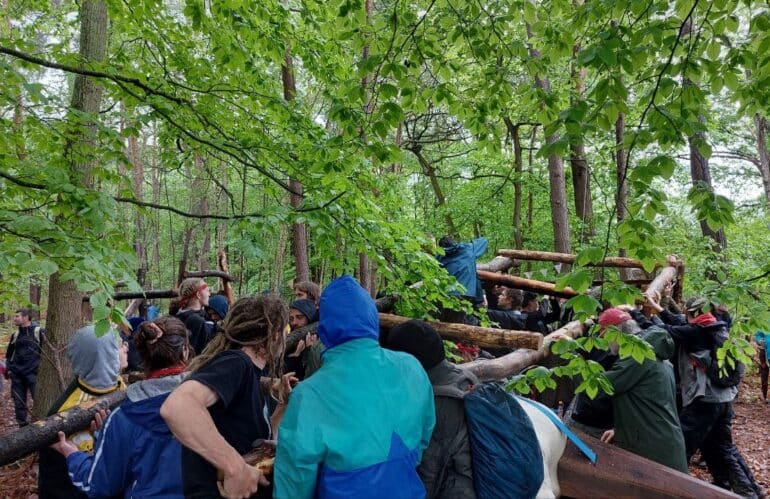
visual: collage (detail) created by the organizing committee from a collection of graffiti from controversial urban projects, 2026 © Study days "Project practices and citizen mobilization. Living, protesting, experimenting"

Cross-disciplinary review no. 9

Publication – Pathways, interweaving, hybridization: a global history of architecture and urbanism

The journal transversale, histoire: architecture, paysage, urbain has published its ninth issue on the theme of Journeys, Interconnections, Hybridization: A Global History of Architecture and Urbanism.
This issue is coordinated by Leonore Dubois-Losserand, researcher at EVCAU (ENSA Paris-Val-de-Seine), Marie Gaimard, researcher at ATE, and Gilles-Antoine Langlois, researcher at EVCAU (ENSA Paris-Val-de-Seine).

For the first time, the cross-disciplinaryreview isco-produced in partnership with ENSA Paris-Val-de-Seine,ENSA Normandie, the EVCAU laboratory, and the ATE laboratory.

The issue contains 12 articles, 1 HDR presentation, and 8 thesis presentations. The table of contents includes the following contributions:

"Journeys, weaving, hybridization: a global history of architecture and urbanism, " by Gilles-Antoine Langlois, Marie Gaimard and Leonore Dubois-Losserand,

– a presentation of the seminar paper by Pauline Morvan, a student atENSA Normandie "Tramway2028 in Caen"

– A presentation of Miléna Koutani's thesis: "Thought and praxis establishing the common good: a third way for urban alternatives," defended within the ATE laboratory.

– a presentation of the thesis byAxelle Thierry : "Negotiating agriculture in the Greater Paris archipelago. Prospective study on agro-ecological urban planning and its co-benefits through the landscape project,"defended at the LAREP laboratory.

Click HERE to see the magazine contents

visual: cover of issue no. 9 of the Transversale magazine , 2025 – © Fondation Le Corbusier

Published on

by Antoine Apruzzese

Thesis defense – Democracy in architecture

On Monday, January 12, 2026, at 2 p.m. in the Jean Duminy lecture hall, Antoine Apruzzesewill defend his doctoral thesis entitled "Democracy in Architecture: Architects' Practices of Political Engagement and Conditions for a Political Theory of the Discipline."

This doctoral thesis was prepared at the ATE laboratory, under the supervision of Caroline Maniaque, professor emeritus, ENSA Normandie, ATE.

Jury member

Laurent Stalder, Professor, ETH Zurich (Rapporteur)
Jean-Louis Violeau, Professor, ENSA Nantes (Rapporteur)
Marco Assennato, Senior Lecturer, ENSA Paris-Malaquais (Examiner)
Sandra Fiori, Senior Lecturer, ENSA Lyon (Examiner)
Maëlle Tessier, Professor, ENSA Nantes (Examiner)

A live webcast of the presentation can be viewed by clicking HERE.

Thesis summary
This thesis examines the political engagement of architects in their practices and analyzes how this engagement allows us to question, and even redefine, the role of the architect in contemporary society. The work seeks to show the potential and limitations of architecture—as a discipline, social practice, and process of environmental transformation—to engage with politics and bring about new, alternative, or experimental forms of democracy. The study focuses on different trajectories of architects' engagement and their inscription in spaces and territories, bringing into tension a thinking of autonomy, emancipation, and participation with that of the environment, resources, and the non-human. The thesis thus critically questions the capacity of architecture—as well as its potential singularity—to articulate the concepts of democracy and ecology.
Taking the "crisis of democracy" as its methodological starting point, the work analyzes the gap between the democratic ideal and the entirety of its practices, expressions, and daily performances. Part of the field of architectural research, it approaches democracy not as a philosophical-political ideal from which principles applicable to buildings can be derived, but as a theoretical object emerging from architectural thought itself: from its methods, its epistemology, and its ability to formalize the spatial, material, and organizational dimensions of collective life. The thesis thus develops a conceptual framework for envisaging a "democracy of architecture" and places it in dialogue with political philosophy and sociology.
After establishing a definitional grammar of political engagement based on Elizabeth Anscombe's analytical theory of action, the research draws on two case studies: Atelier Bow-Wow (Tokyo) and Raumlabor (Berlin). The work analyzes their discourses—structured by the use of philosophical and political references such as Henri Lefebvre, Bruno Latour, Guy Debord, and the Situationists—as well as two specific architectural experiences: the reconstruction of the village of Momonoura and the Floating University project. By linking these practices to their unique contexts while identifying their convergences, the thesis offers a reflection on the transversality of a "democratic nature" specific to architectural practice.

More information HERE

visual: Floating University Project, 2018, Raumlabor, Berlin. Drawing © Antoine Apruzzese, 2022

Create & Innovate" seminar 2025 edition

Alexis Desplats, PhD student, first prize for innovation

On November 13 and 14, 2025 in Caen, P.U.I Normandie and CY Cergy Paris Université organized the "Create & Innovate" seminar for doctoral students. The seminar, part of the 6th edition of the Créativ' week, was dedicated to the emergence of innovative projects and raising awareness of business creation.

Alexis Desplats, a doctoral student at the ATE laboratory, has been awarded the First Prize for Innovation for his "Les petits moteurs" project! At a time when communes across France are massively renovating their school playgrounds, Les petits moteurs proposes to transform the energy generated by children's play into electricity. The kinetic energy produced by their movements becomes a green, low-carbon source to power lighting in playgrounds, toilets and playgrounds.

More information HERE

visual: © Séminaire "Créer & Innover

Published on

By Mourad Bouzar

Presentation - Between heritage and refoundation: building a school of architecture in a postcolonial context.

On Thursday, December 11, at 4:30 p.m. in the Jean Duminy lecture hall, the ATE laboratory is organizing a meeting with researcher Mourad Bouzar who will present the progress of his research under the title "Between heritage and rebuilding: building a school of architecture in a postcolonial context. Algeria (1962-1969): a review of the research." Mourad Bouzar is visiting the ATE laboratory for a research stay as part of the André Mandouze grant.

The discussion will be moderated by Marie Gaimard, researcher at the ATE laboratory.

Summary of presentation
This presentation provides an overview of research into architectural education in Algeria between 1962 and 1969, a period marked by the refounding of university institutions against a backdrop of vacancies for qualified teachers and managers. At the heart of this research was the École nationale d'architecture et des Beaux-arts d'Alger (ENABA), reopened in autumn 1962 on the foundations of the former École nationale des Beaux-arts, but without most of its teaching staff. Until 1969, however, its architecture department would train the country's leading architects, who would be entrusted with the structuring projects of the following decade.

Between heritage and refoundation, this seven-year interval was characterized by an influx of architects from France, Switzerland, Italy, Eastern Europe, Cambodia and Uruguay. This convergence of players, most of whom had no previous teaching experience and heterogeneous training and references, encouraged the transfer and confrontation of diverse teaching models, whose gradual hybridization would have a lasting impact on the training of architects in Algeria.

Initiated within the framework of the André Mandouze grant, the recent exploitation of the archives of the Service national de coopération (Service historique de la Défense - site de Vincennes), the Bureau de l'administration des Beaux-arts (Archives nationales - site de Pierrefitte-sur-Seine), and the Secrétariat d'État aux affaires algériennes (Archives diplomatiques - site de la Courneuve), should make it possible to fill the documentary gaps in the Algerian archives, which have been dispersed since the transfer of the architecture section to the École polytechnique d'architecture et d'urbanisme (EPAU) in 1970.

In order to question the transfer and hybridization of teaching models, the presentation puts into perspective the material extracted from these funds and that drawn from the administrative archives of the former ENABA in previous studies. As well as reconstructing the prosopography of these teaching cohorts, the research examines Franco-Algerian cultural transfers, particularly in the context of cooperation, and their hybridization in a post-colonial context. It proposes a discussion of these pedagogical legacies which, across seas and borders, structure the training of architects.

visual: Composition by Mourad Bouzar. Foreground: École Nationale des Beaux-Arts (Arch. Léon Claro and Jacques Darbeda). View from the terrace. Bromide photo, Jomone edition. Background: Le Journal d'Alger, June 2, 1960, page 1.
Fonds du Bureau de l'administration des Beaux-arts, Archives Nationales (site Pierrefitte-sur-Seine), call number: F/21/9159

André Mandouze Scholarship

Hosting a foreign researcher - Mourad Bouzar

From December 1, 2025 to December 19, 2025, the ATE laboratory is pleased to welcome researcher Mourad Bouzar, lecturer at the École nationale supérieure des Beaux-arts d'Alger.

Mourad Bouzar is currently on a research visit as part of the André Mandouze grant. Hosted by ATE under the direction of Marie Gaimard, he is observing the transfer of architectural teaching models from France to Algeria, with a particular focus on the role of Technical Cooperation during the first post-independence decade. Since October 20, 2025, he has been conducting this research in the archives of the Service historique de la Défense (Vincennes site), the Archives Nationales (Pierrefitte-sur-Seine site) and the Centre des Archives diplomatiques (La Courneuve and Nantes sites).

A presentation of his work will be held on December 11, 2025, at 4:30 p.m. atENSA Normandie Jean-Duminy lecture hall).
More information HERE.

Mourad Bouzar
Trained as a landscape architect, Mourad Bouzar also holds a Master's degree in Arts and Art Sciences from the École nationale supérieure des Beaux-arts d'Alger (2015) and a PhD in Art History from the Université Paris 1 Panthéon-Sorbonne (2022).

Following initial research into the appropriation of colonial-era social housing space in a postcolonial context, and a thesis studying the professional career of Swiss architect Jean-Jacques Deluz (1930-2009), his most recent research focuses on the transfer of architectural teaching models from Switzerland and France to Algeria. They question the processes that underpinned their hybridization between 1962 and 1988 in the Algerian field, at the École nationale d'architecture et des Beaux-arts (ENABA) and the École polytechnique d'architecture et d'urbanisme (EPAU).

Currently a lecturer at the École nationale supérieure des Beaux-arts d'Alger, Mourad Bouzar is in charge of the space design and furniture workshops, as well as the history of architecture and descriptive geometry modules. Since 2023, he has been in charge of "Alger Archi XVI-XX", a research group that introduces students in the Bachelor's and Master's programs in space design to the creation of monographic files, while familiarizing them with the city's history, urban planning and architecture.

Since September 2024, he has been head of ARTI, ENSBA-Alger's startup incubator, and chairs the Commission de suivi méthodologique des mémoires et projets de fin d'études.

by Miléna Koutani

Thesis defense - Thought and the instituting praxis of the common

On Friday, December 12, at 2 p.m. in the Jean Duminy lecture hall, Miléna Koutani will defend her doctoral thesis entitled "Thoughts and praxis establishing the common good. A third way for urban alternatives."

This doctoral thesis was prepared at the ATE laboratory, under the supervision of Bruno PROTH, professor, ENSA Normandie, ATE.

Jury member

Silvana Segapeli, University Professor, ENSA Saint-Etienne (Rapporteur)
Mathias Rollot, Senior Lecturer HDR, ENSA Grenoble (Rapporteur)
Catherine Deschamps, University Professor, ENSA Paris-La Villette (Examiner)
Florence Bouillon, Associate Professor, Université Paris 8 (Examiner)
Arnaud Le Marchand, Maître de conférences HDR, Université du Havre (Examiner)

A live webcast of the presentation can be viewed by clicking HERE.

Summary of thesis
Since the 2000s, the concept of the commons has come to dominate a number of disciplinary fields, and today goes beyond its initial framework, developed by the pioneering work of Elinor Ostrom. Characterized as co-activity between individuals within a collective, the commons also represents a third way in the production of space, beyond state action and market constraints. This doctoral research focuses on the work of the (faire-)commun, integrated into the urban and architectural field, where new cooperative, alternative and sometimes radical modes of living are being experimented with.
To do so, we draw on various fields of investigation in Seine-Maritime: the follow-up to the occupation of the Foyer Sainte-Marie by the Jardins Joyeux collective, linked to other past struggles and experiments underway in the Rouen metropolitan area (Ferme des Bouillons, Tiers-lieu du 40 and the Grenouille squat). The study of other structures, such as Hangar Zéro in Le Havre, has also enabled us to delve deeper into the stages of conditioning the common, in relation to a renewed right to the city: from the opening of a third space, to the challenges of peer governance, via the definition, identification and transformation of an "interwoven self" within a collective action. At the heart of a movement of instituting resistance, these fields have revealed antagonistic interests in the territory, as they challenge the absolute right of ownership, granting prevalence to the social destination of a space, its access, use and mutualization. Against the backdrop of a new climate regime and the emergence of new enclosures, these conflict zones allow us to question our needs, desires and renunciations.
By defining the common and its architectural and urban implications on the one hand, and assessing its ramifications within alternative projects on the other, this research aims to analyze new forms of mutualistic, supportive and cooperative links, likely to give rise to, structure and stimulate unprecedented urban transformations.

More information HERE

visual : Occupation of the Bouillons Farm in 2015. Photo © Bouillons Terres d'Avenir