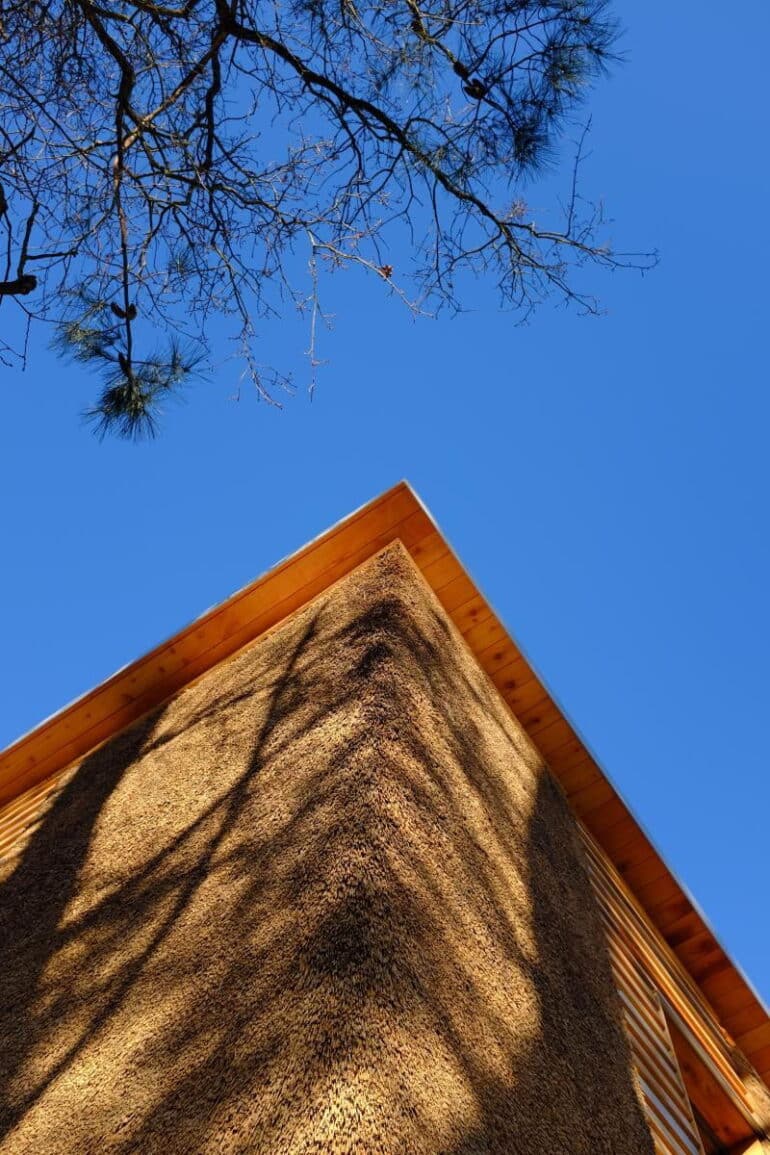
An envelope design described as innovative for two artists' houses. A tailor-made die that adds value to a coastal plant heritage. A multi-functional design that extends to the material, the construction system, the die and even the strategic design of a foundry. Tomorrow, walls simplified to a minimal and biophilic expression: a "hearth skin"! Wouldn't innovation finally be the effectual process linked to the contemporary use of vernacular materials; reed, wood?
Conference organised by the ATE laboratory as part of the Fabrique Echelle 1, Experimenting with the Reed
Visual: ©Clémence Cazenave