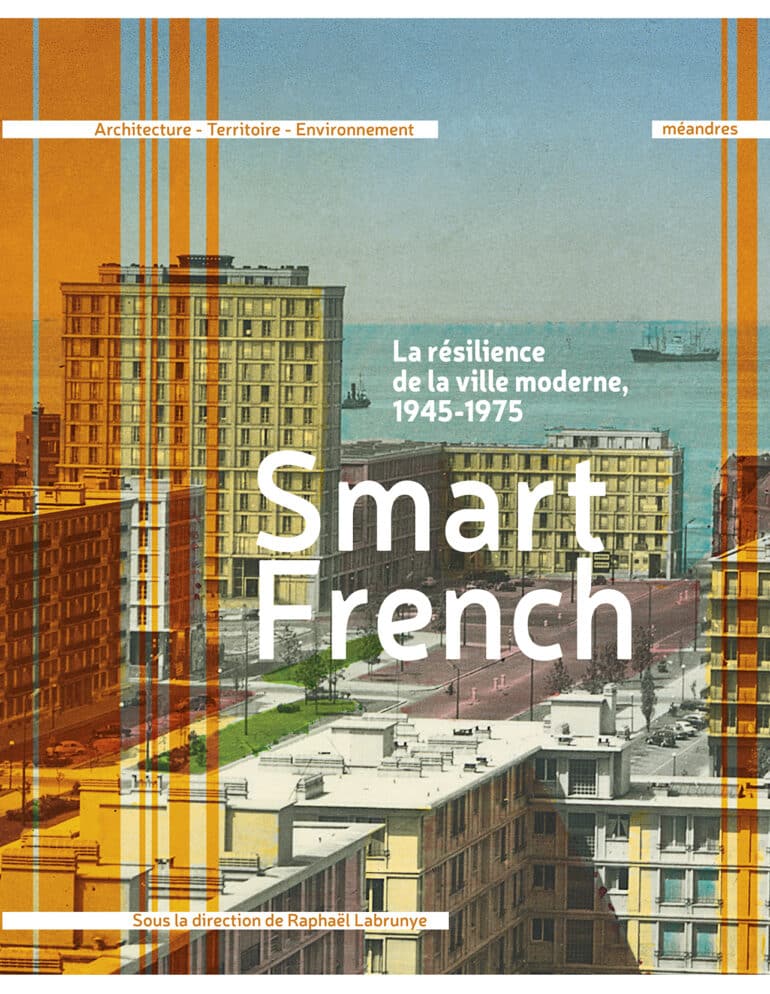
under the direction of Raphaël Labrunye

Smart French - The resilience of the modern city - 1945-1975

Les éditions des méandres and the ATE laboratory publish the book Smart French. The resilience of the modern city. 1945-1975.
This collective work is edited by Raphaël Labrunye, researcher at the ATE laboratory.

Summary of the book

The Smart French research project is based on the premise that the built in France between 1945 and 1975 possess under-appreciated architectural qualities, conducive to à environmental transition. It offers an alternative to global approaches, which are often disparaging, and to monographic studies, which are necessary but difficult to generalize. Given the the lack of statistical data on this architecture, the study focuses on à develop relevant indicators, à based on a corpus of nearly 300 operations, to describe criteria such as the daylighting and ventilation.

The analysis is based on data taken from contemporary architectural reviews of these and designers' speeches. Thanks à statistical methods, the aim is to identify architectural recurrences, in order to inform public intervention policies targeting these that take into account their specific architectural and environmental features.

Authors

Shahram Abadie
Gauthier Bolle
Karim El Alami
Margherita Ferrucci
Élise Guillerm
Amir Mahamoud Issa
Raphaël Labrunye
Ignacio Requena
Daniel Siret
Yannick Sutter

The publication of this book was made possible thanks to the support of the Ministry of Culture, PUCA, the Normandy Region, the ATE laboratory (ENSA Normandie), the Arts, Civilization, and History of Europe laboratory – Arche – UMR 3400 (ENSA Strasbourg), ENSA Clermont-Ferrant, and ENSA Brittany.

More information on the book HERE

visual: cover of Smart French, éditions des méandres, 2024

Publication:
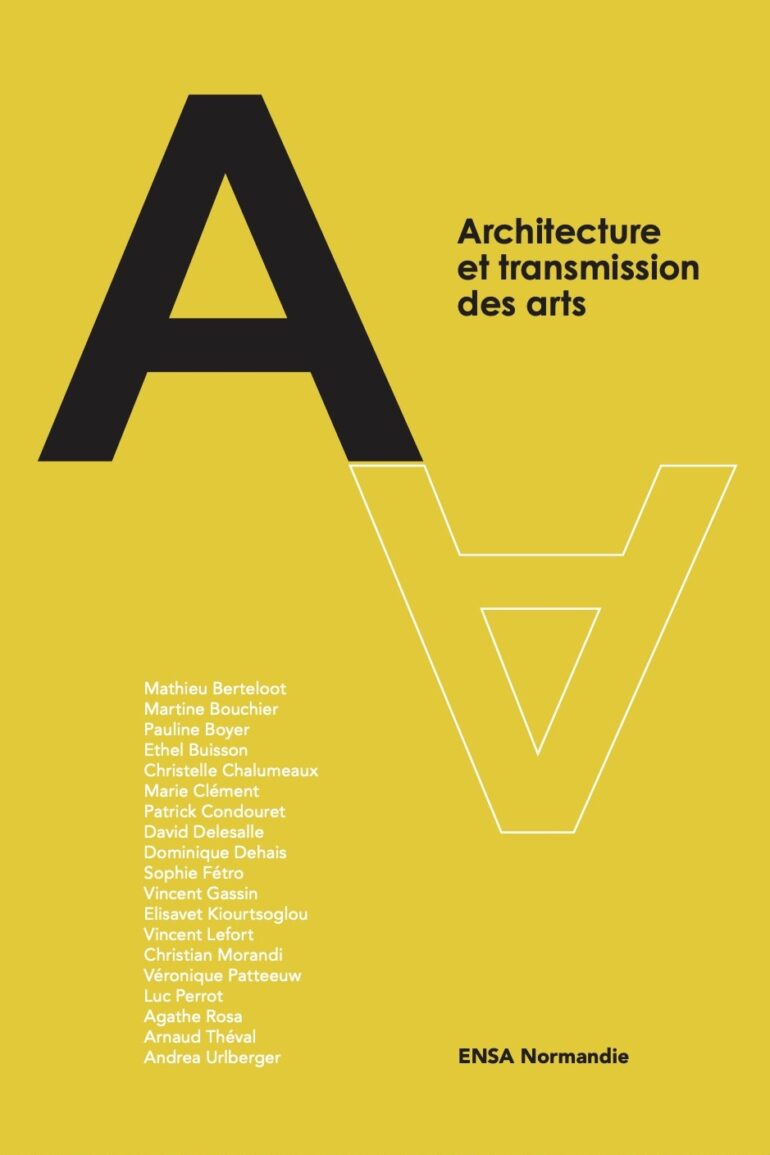
Architecture and transmission of the arts

The Normandy National School of Architecture and the ATE laboratory are publishing a book entitled Architecture et transmission des arts(Architecture and the Transmission of the Arts). This collective work, edited by Dominique Dehais, is the result of a series of study days held in May 2017 atENSA Normandie.

Summary of the book

Architectural education is composed of disciplines that contribute to the scientific, technical and sensitive scope of urban and landscape architectural design. The transmission of the arts, whether plastic, visual, theoretical or practical, is part of the educational corpus of architectural education. In its process, the Bologna Directive (EU 1999) includes the arts in the list of competences for the practice of architecture.

The contributions gathered in this book are a follow-up to the May 2017 study days at the École nationale d'architecture de Normandie. Through the singularity of their authors' didactic paths, they draw up a panorama of the issues and attitudes that give shape to the experience of art in order to understand and act in the creation of the artefacts that produce the reality of our living environments. Environments in which architecture plays a determining role.

Download the summary by clicking HERE

For any request in paper version contact the research laboratory via the form

Publication:

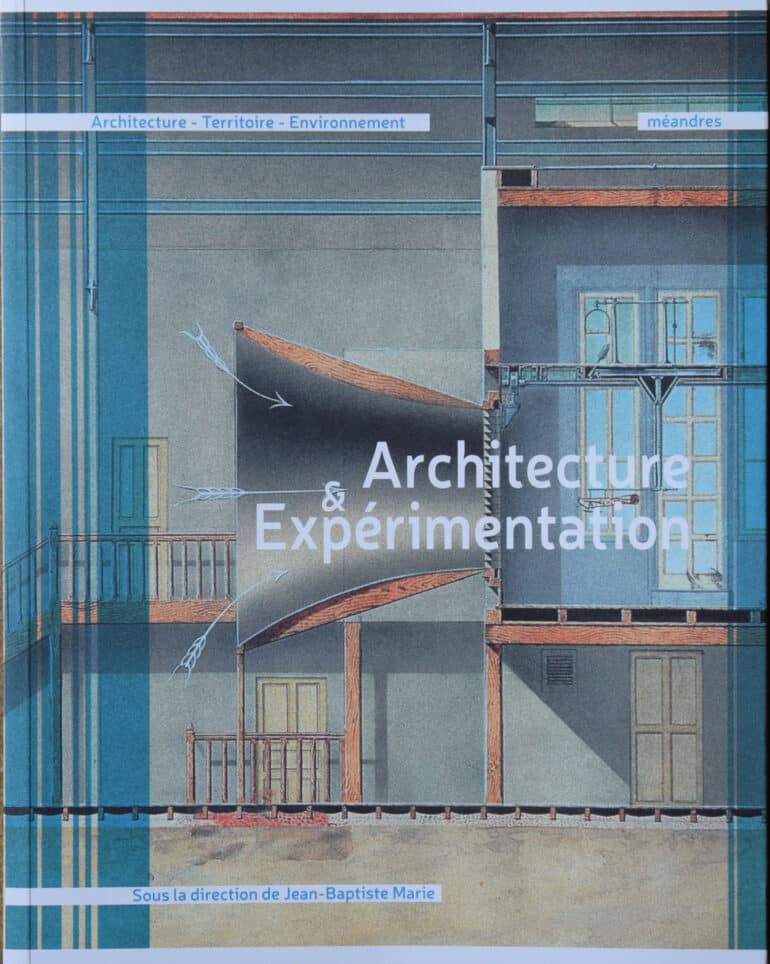
Architecture and Experimentation

Marie J-B (dir.), Architecture et Expérimentaion, Rouen, ATE / Éditions des Méandres, 2020, 176 p.

Experimentation is on the rise, judging by its increasing importance in the daily life of architectural practices. Better still, it has established itself in architecture schools around the world as a new tool for learning by doing and as one of the protocols for research. However, this new modus operandi for architecture is not without its critics, because of its strong focus on the manipulation of matter or its lack of a theoretical corpus. Faced with the profound changes in the architectural profession, what role can experimentation play in the face of the new challenges of the ecological transition?

The book discusses the need for a new methodological framework to better control project processes: these involve renewing the system of actors - in particular by renewing the links between engineers and architects -, managing technological innovations at the service of the project, reinventing the dialogue between agencies and industry, and paying greater attention to user demands. Experimentation is thus examined within architectural agencies, through the role it plays in architectural education and as a tool for architectural research.

Book on request depending on stock availability

Publication:

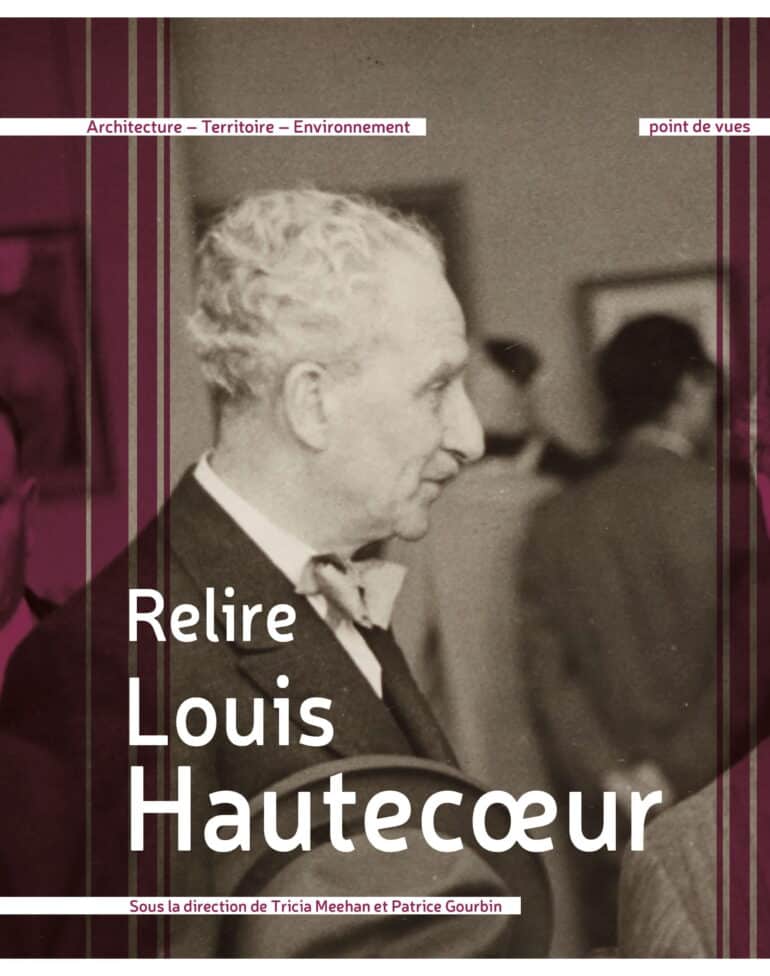
Rereading Louis Hautecœur

Tricia Meehan and Patrice Gourbin (eds.), Élise Guillerm (scientific coordination), Relire Louis Hautecœur, Rouen, ATE / Éditions Point de vues, 2019, 175 p.

Louis Hautecœur (1884-1973) devoted his life to art and architecture, past and present. As an agent of the State, he was involved in artistic and architectural debates and institutions, and his career illustrates the great upheavals of the 20th century.

Versatile and polygraphic, he successively or simultaneously exercised several professions: professor of art and architecture history (École du Louvre, École des beaux-arts), architectural historian (History of classical architecture in France in seven volumes), exhibition curator (international exhibitions, Venice biennials), curator (Musée du Luxembourg, inspiration for the Musée National d'Art Moderne) and reforming administrator (Direction des Beaux-Arts in Egypt and France).

This book explores some of the lesser-known aspects of his political influence and cultural diplomacy, his museum and museography, his administration, and his conception of a timeless classicism, placing them in their artistic, intellectual and political context.

Book on request depending on stock availability

Publication:

TheENSA Normandie Notebooks9

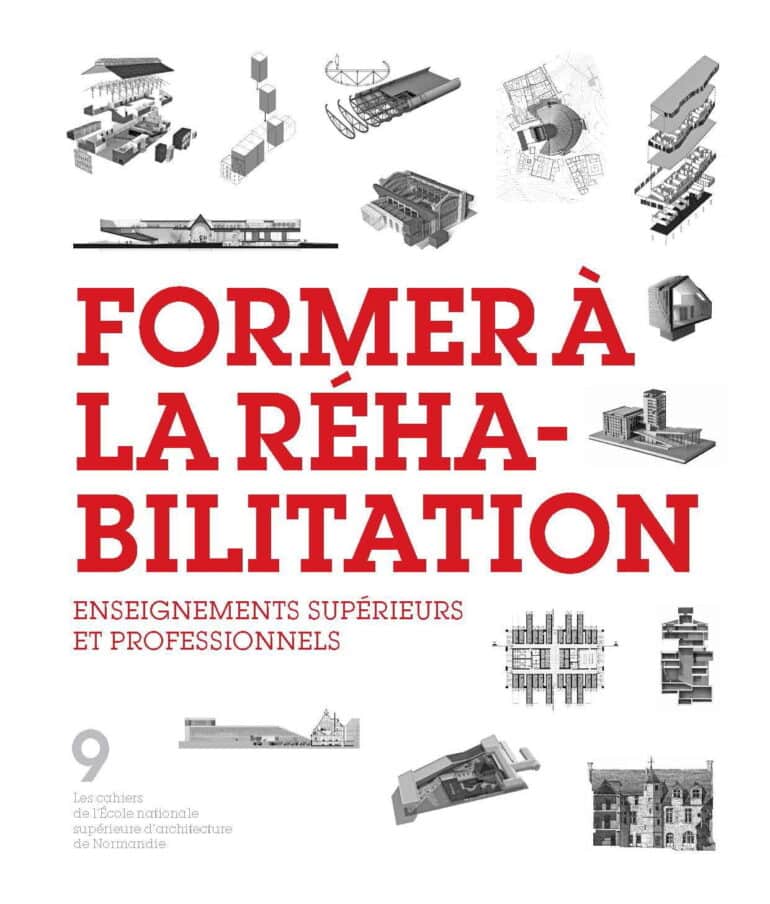
Training for rehabilitation

Rehabilitation is a multi-faceted term, a major issue and a potential for architectural creation, but how are students and professionals trained, according to which courses and in which institutions? These questions were the subject of a study, commissioned by the PUCA within the framework of the REHA programme, consisting of a survey that provides an overview of the current offer.
This book is the result of this study; beyond the overall view it offers, it opens up avenues of reflection for developing the teaching of rehabilitation in order to give it a full and complete place in schools of architecture, but also to disseminate architectural culture in professional training.

Book on request

Publication:

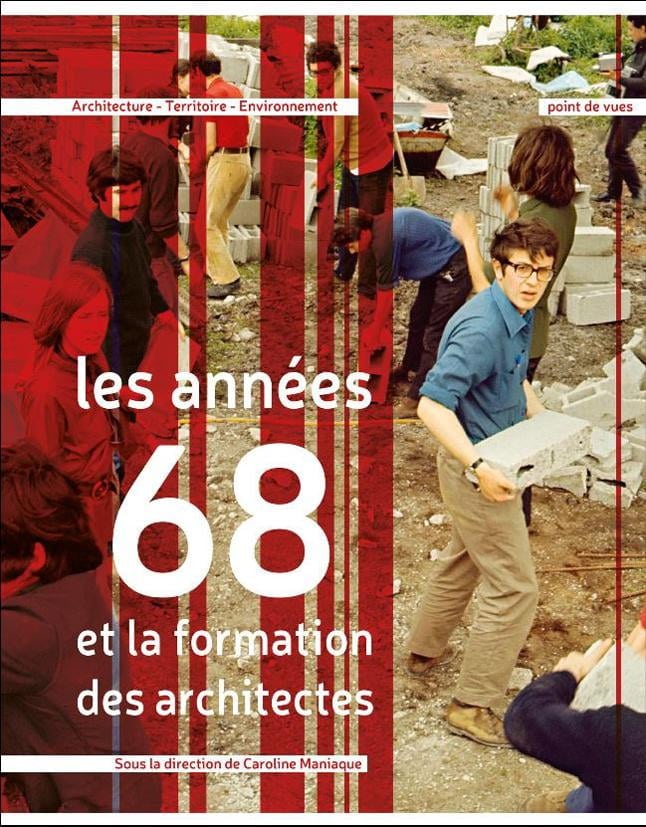
The 68s and the education of architects

Maniac, C., The years 68 and the training of architects, Rouen, Point de vues, 2018

The ATE Normandie team wished to set up a collection characterised by its format, its principle of a flap cover and its layout. The first of this collection was published in May 2018 under the title Les années 68 et de la formation des architectes (ed.: Caroline Maniaque).

How did architectural education evolve between 1965 and 1975, in the face of the many criticisms and reflections to which it was subjected? The training at the École des Beaux-Arts in Paris was considered to be too focused on form and not attentive enough to construction practice, inhabitants, sites, climatic and environmental aspects. Recent research, however, has nuanced these judgements. This book focuses on the methods of pedagogy. It considers both the experiences already present before 1968, and their development in the educational units built from the end of the 1960s onwards, up to the moment when these educational units were renamed Schools of Architecture in 1986.

Book on request depending on stock availability

Publication: