Summary
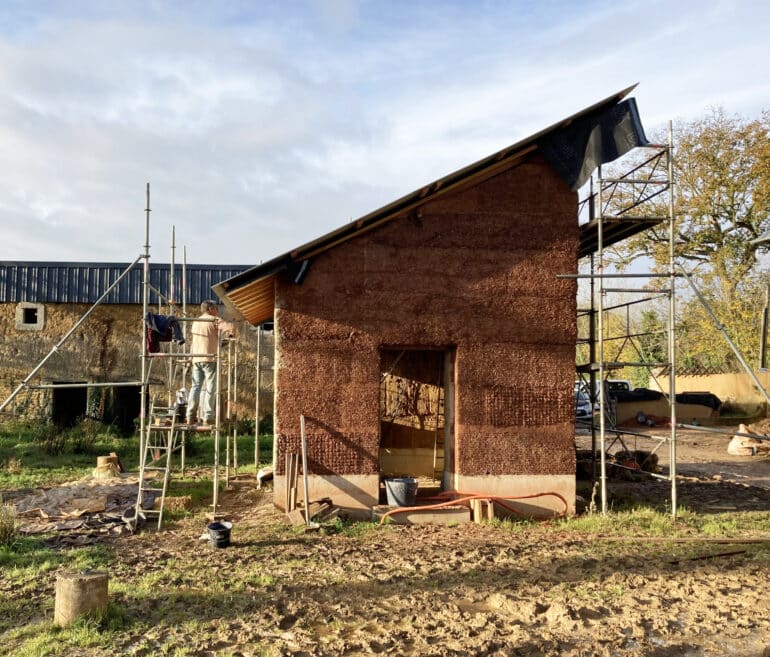
"This thesis takes a look at recent cob architecture in France and the UK, and how designers are adapting their practices to make cob emerge in their projects. It highlights the technique's potential not only to renew contemporary architecture, but also to transform the design process.
Since the 1990s, one of the most popular raw-earth construction techniques, bauge, has been re-emerging in contemporary architecture, but its forms and construction methods differ from those of traditional architecture. On the other hand, in spite of this revival, logs are struggling to make a real impact on the architectural landscape, and architects are frustrated to hear of "obstacles" to the use of a technique that is out of step with conventional construction. This research proposes a new reading of the available knowledge likely to inform the design and prescription of bauges, while questioning what this knowledge produces in terms of practices and singular architectures.
The corpus we've assembled - inscribed knowledge, testimonials from industry players, and recent buildings - is examined from three angles related to logs: that of phenomena, that of imaginaries, and that of practices. Cross-observations highlight the fragmentation of knowledge required to assess the technique's potential, a renewal of aesthetics in discourse and architectural production, capable of transforming the imaginary of timber more generally, and finally, a reappropriation of the power of the project manager in his conventional action, with a transformation of his relationship to the construction and to those involved on the site. These insights can help us to question certain paradigms of architectural design, at a time when the ecological and social challenges of construction are calling us to reconsider our model of society.
This thesis therefore offers a critical and situated catalog of knowledge about architecture and construction in logs, addressed to those who wish to design with this technique."