edited by Noura Arab and François Fleury

<i>Ressources pour l’architecture écologique. Tome 3, Intelligences de l’existant</i>

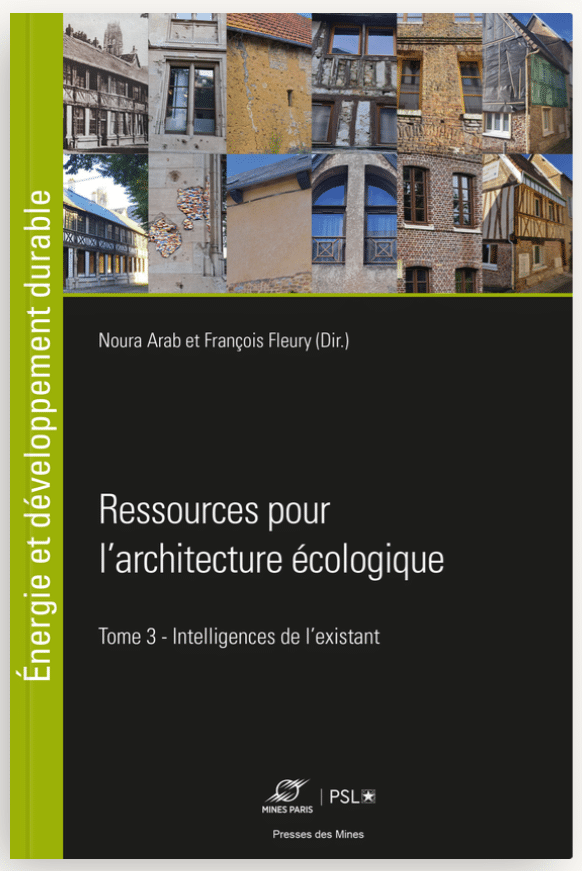
Les Presses des Mines, the École Nationale Supérieure d'Architecture de Normandie, the ATE laboratory and the Natural Renewable Resources, Climate and Architecture Chair, are publishing the book Ressources pour l'architecture écologique. Tome 3, Intelligences de l'existant. This collective work is the result of the seminar " L'Existant, l'architecture comme ressource" , held in October 2024 at ENSA Normandie. It closes the cycle initiated in 2022.
The book is edited by Noura Arab and François Fleury, teacher-researchers at the ATE laboratory.

Summary of the book

Existing buildings are valuable for many reasons. In constructing them, men and women have invested their intelligence, their labor and their values. Their construction has polluted and consumed resources taken from nature. By inhabiting them, we have charged them with emotions, memory and landmarks. So is it still necessary to demolish in order to rebuild? How can we make the most of this exceptional resource?

This book, the third and final volume devoted to resources for ecological architecture, explores the way in which intervention on existing buildings is now the reference situation for thinking about the architecture of tomorrow. It shows the challenges and opportunities of a relationship with the existing that attributes new values to it, while being more attentive to its intrinsic qualities.

Researchers, educators, architects and engineers examine the implications of this posture for teaching, professional practice, territorial and regulatory strategy. The aim of this book is to bring together different viewpoints in order to question our models, provide inspiration and lay the foundations for an architecture that reappropriates its past creations as an essentially ecological posture.

View a PDF excerpt

The link to the publisher's website for the purchase of the book (printed version or digital version)

More information on the Renewable Natural Resources, Climate and Architecture Chair


visual: cover of Ressources pour l'architecture écologique. Tome 3, Intelligences de l'existant, Presses des Mines, 2025

Publication:

Fanzine

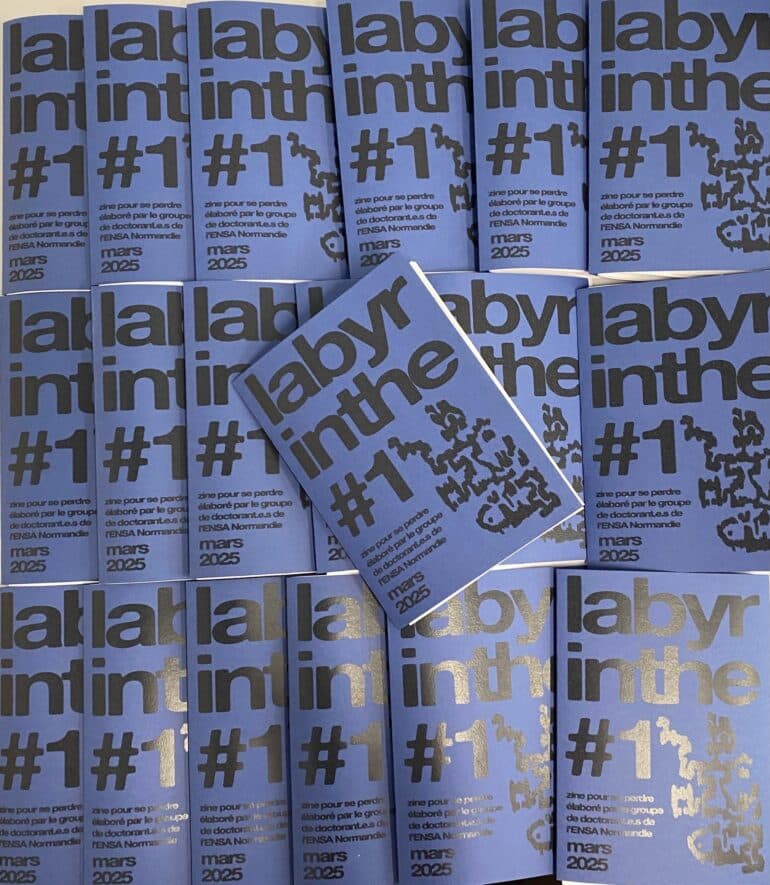
Labyrinth #1

The desire to create a space in which every doubt, every question, every sensitivity can become tangible, gave rise 2 years ago to the "Labyrinthe" Fanzine project by the ENSA Normandie / ATE doctoral student collective. The common desire to share and promote an exploratory approach has been extended to include researchers, teachers and artists in this dynamic of critical positioning.

This publishing project is once again based on the emblematic figure of the labyrinth, a place for wandering or strolling, hostility or refuge, symbolizing this reflexive process, and inviting us to evolve, to transform ourselves individually and collectively.

This issue invites us to explore a number of themes that all relate in different ways to the transformation of our reality: excess - or dis-measure, mutation and resilience.

***

Contents of issue #1 - March 2025: editorial / Labyrinths and video games / Measuring excess / I love you... / Staying a researcher, at what price? / Re-port or the bitter seven of Juvisy / Salle de fêtes / Their joy

Editorial team: Antoine Apruzzese, Lucie Dehame, Alexis Desplats, Miléna Koutani, Léna Tullifer

With contributions from Alexis Desplats, François Fleury, Nikolas Fouré, Miléna Koutani, Kacha Legrand, Léna Tullifer, Alix Turcq

LINK TO THE FANZINE WEBSITE HERE

Publication:

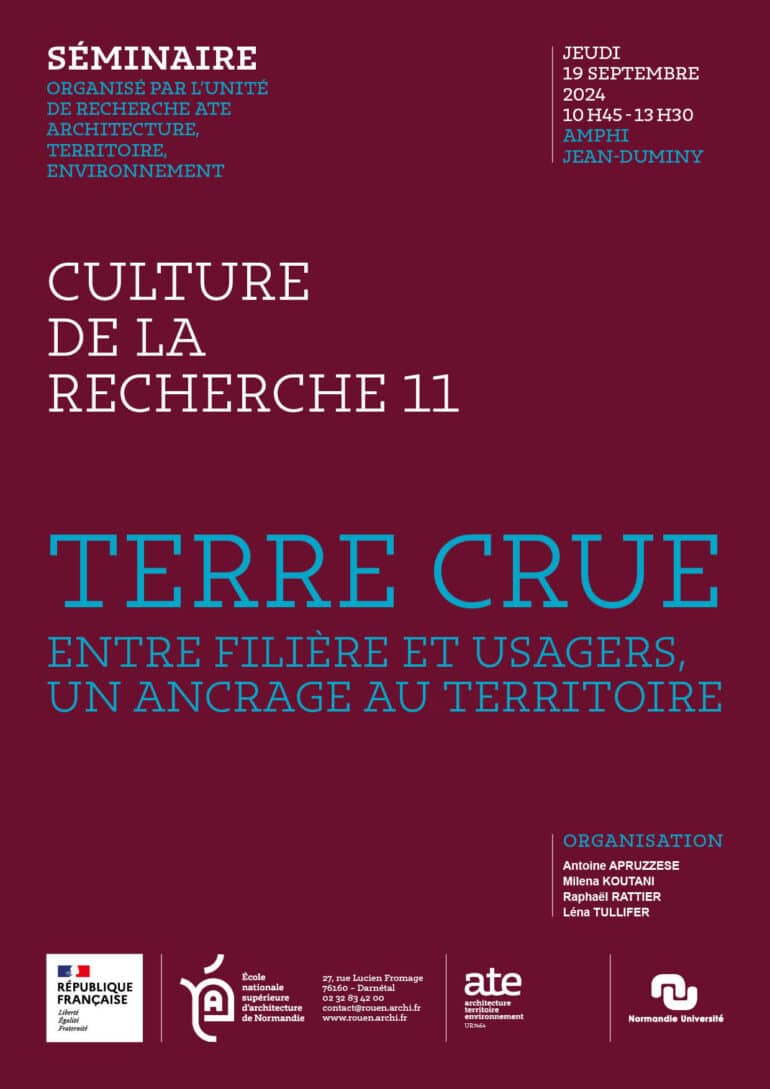
Research culture 11

Publication:

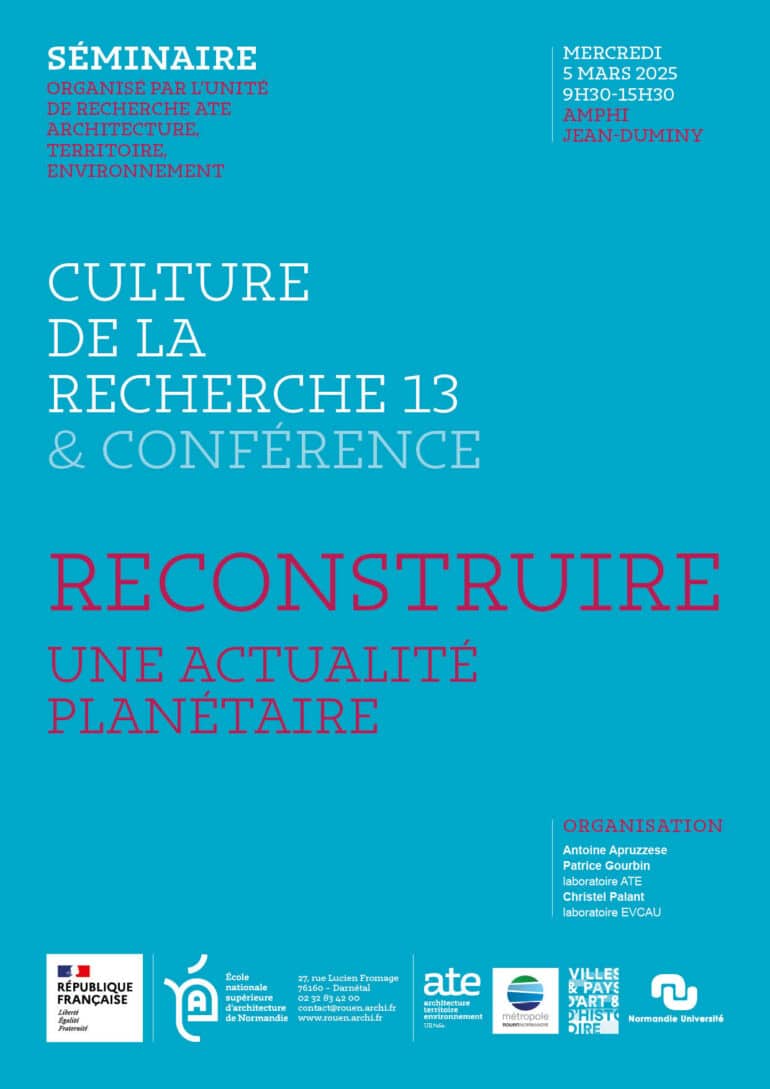
Research culture 13

Publication:

under the direction of Raphaël Labrunye

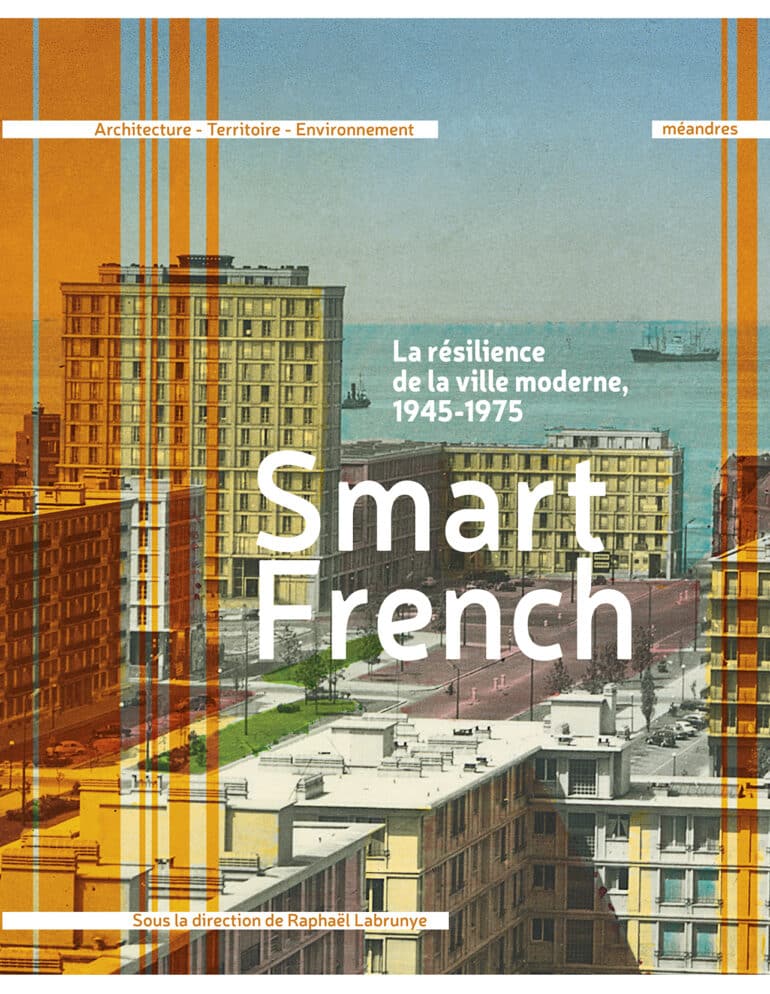
Smart French - The resilience of the modern city - 1945-1975

Les éditions des méandres and the ATE laboratory publish the book Smart French. The resilience of the modern city. 1945-1975.
This collective work is edited by Raphaël Labrunye, researcher at the ATE laboratory.

Summary of the book

The Smart French research project is based on the premise that the built in France between 1945 and 1975 possess under-appreciated architectural qualities, conducive to à environmental transition. It offers an alternative to global approaches, which are often disparaging, and to monographic studies, which are necessary but difficult to generalize. Given the the lack of statistical data on this architecture, the study focuses on à develop relevant indicators, à based on a corpus of nearly 300 operations, to describe criteria such as the daylighting and ventilation.

The analysis is based on data taken from contemporary architectural reviews of these and designers' speeches. Thanks à statistical methods, the aim is to identify architectural recurrences, in order to inform public intervention policies targeting these that take into account their specific architectural and environmental features.

Authors

Shahram Abadie
Gauthier Bolle
Karim El Alami
Margherita Ferrucci
Élise Guillerm
Amir Mahamoud Issa
Raphaël Labrunye
Ignacio Requena
Daniel Siret
Yannick Sutter

The publication of this book was made possible with the support of the French Ministry of Culture, the PUCA, the Normandy Region, the ATE Laboratory (ENSA Normandie), the Arts, Civilization and History of Europe Laboratory - Arche - UMR 3400 (ENSA Strasbourg), ENSA Clermont-Ferrant and ENSA Bretagne.

More information on the book HERE

visual: cover of Smart French, éditions des méandres, 2024

Publication:

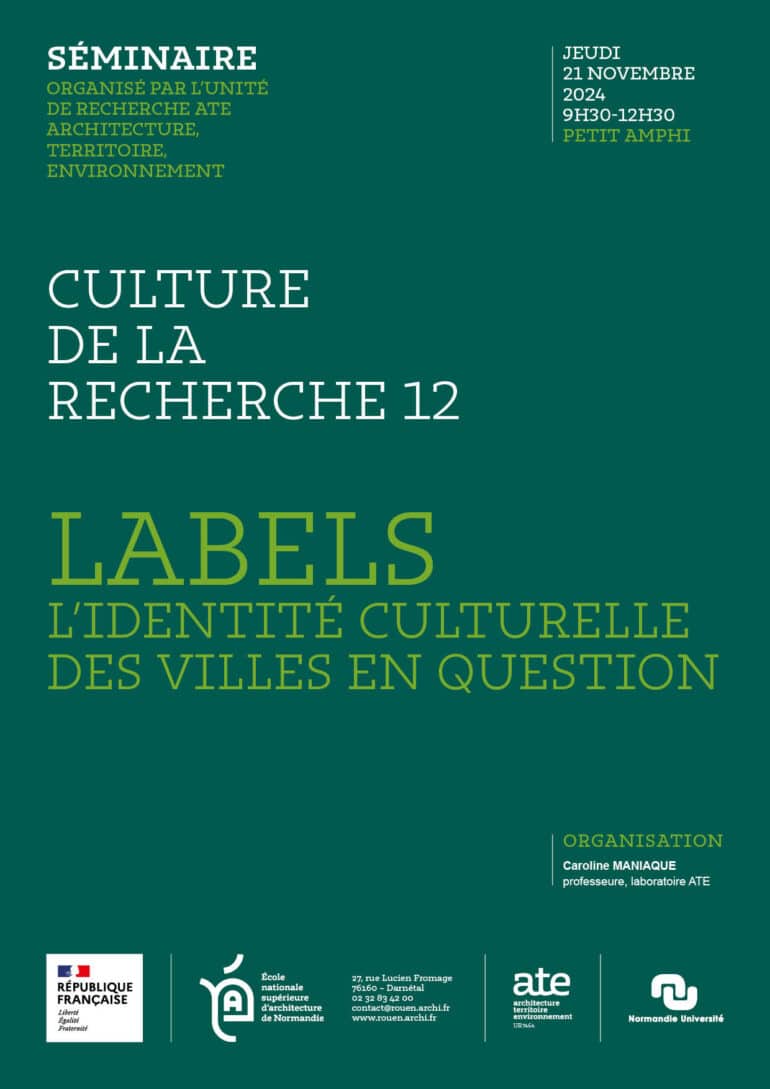
Research culture 12

Publication:

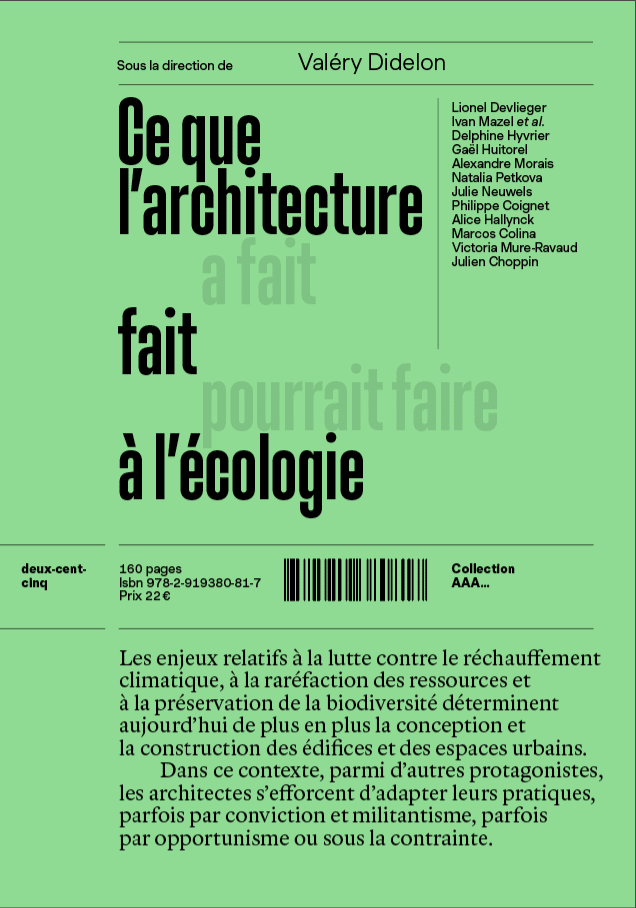
under the direction of Valéry Didelon

What architecture does for ecology

Editions 205, the École nationale supérieure d'architecture de Normandie and the ATE laboratory have published Ce que l'architecture fait à l'écologie.
This collective work is edited by Valéry Didelon, teacher-researcher at the ATE laboratory.

Summary of the book

As a counterpoint to the abundant existing literature on what ecology does to architecture, this book reverses the perspective and opens up a debate. The authors, both researchers and practitioners, examine the many ways in which those involved in the development of built spaces - architects, landscape architects, engineers, etc. - shape society's expectations in terms of the fight against climate change. - to shape society's expectations in the fight against climate change, resource depletion and the collapse of biodiversity. What architecture does to ecology shows that their practices and discourses determine the conditions of production of the built environment as much as they are determined by them. In this book, architecture is seen as one of the laboratories for inventing the techniques, aesthetics and, above all, ethics that can orient and guide collective action in the world to come.

Authors:
Lionel Devlieger, engineer-architect and historian
Julien Choppin, architect
Philippe Coignet and Alice Hallynck, architects
Marcos Colina, architect
Gaël Huitorel and Alexandre Morais, architects
Delphine Hyvrier, doctoral student and artist
Ivan Mazel, architect-urban planner and doctor of architecture,
and Marie Flécheux, Thierry Joffroy, Julien Nourdin, David Rodrigues-Soares, Yannick Sieffert
Victoria Mure-Ravaud, architect, researcher, teacher
Julie Neuwels, architect and PhD in the Art of Building and Urban Planning
Natalia Petkova, architect

View a PDF excerpt
Link to the publisher's website to purchase the book

visual: cover of Ce que l'architecture fait à l'écologie, éditions 205, 2024


Études normandes number 31

Knowledge and recognition of Reconstruction in Normandy

Issue 31 of Études normandes features a special issue focusing on the knowledge and recognition of Reconstruction in Normandy. The issue was conceived in partnership with the École nationale supérieure d'architecture de Normandie, under the direction of Patrice Gourbin (and funded by the French Ministry of Culture).

The contributions in this double issue are a continuation of the research carried out at ENSA Normandie on Reconstruction after the Second World War. They come from institutional representatives, experts and residents, and reflect the current dynamics of historical knowledge and heritage recognition. The aim is also to imagine relevant methods for adapting this already ancient architecture to today's constraints of comfort and use. Together, the articles form a "research-action" that observes, participates in and commits itself to the evolution of its object of study.

A public presentation of the issue is scheduled for Thursday October 24, 2024 at 6pm at the Maison de l'Architecture-Le Forum (48 rue Victor Hugo, 76000 Rouen).

Find the magazine in bookshops and press outlets.

visual: © Études normandes, 2024 - avenue Maréchal-Leclerc (photo Patrice Gourbin)

Publication:

edited by Noura Arab and François Fleury

<i>Ressources pour l’architecture écologique. Tome 3, Intelligences de l’existant</i>

The Presses des Mines, the École nationale supérieure d'architecture de Normandie, the ATE laboratory and the Renewable Natural Resources, Climate and Architecture Chair, have published the book Resources for Ecological Architecture. Volume 2, Climate and Atmospheres. This collective work is the result of the seminar "Climate, ambient resources in architecture", held in February 2023 at ENSA Normandie.
The book is under the direction of Noura Arab and François Fleury, teacher-researchers at the ATE laboratory.

Summary of the book
Since its beginnings, architecture has always been influenced by the climate, settling where it offered a favorable environment. But the climate is not only a resource for architecture, it is one of its raison d'être that has long shaped many of its characteristics. However, industrialization has not only standardized materials and construction methods, but also architectural forms and comfort, ignoring local climatic peculiarities. Fossil fuel consumption has been greatly increased, thus contributing to the global warming to which architecture must adapt today. Air conditioning is becoming more widespread, still consumes energy and contributes to increasing the urban heat island. How can we get out of this vicious circle?
It is time to rethink architecture as an interface between climate and atmosphere, by asking crucial questions in the face of the increasingly perceptible effects of climate change. This second volume on ecological architecture explores the consequences of the paradigm shift in considering the climate as a resource to be valued and no longer as a hazard from which we must protect ourselves.
It is crucial to put the climate context back at the heart of architectural design and encourage approaches that go beyond standardised environmental standards to ensure a sustainable and environmentally friendly lifestyle.

View a PDF excerpt

The link to the publisher's website for the purchase of the book (printed version or digital version)

visual: cover of Ressources pour l'architecture écologique. Tome 2, Climat et ambiances, Presses des Mines, 2024

Publication:

Research culture 11

Publication: