Fanzine

Maze #2

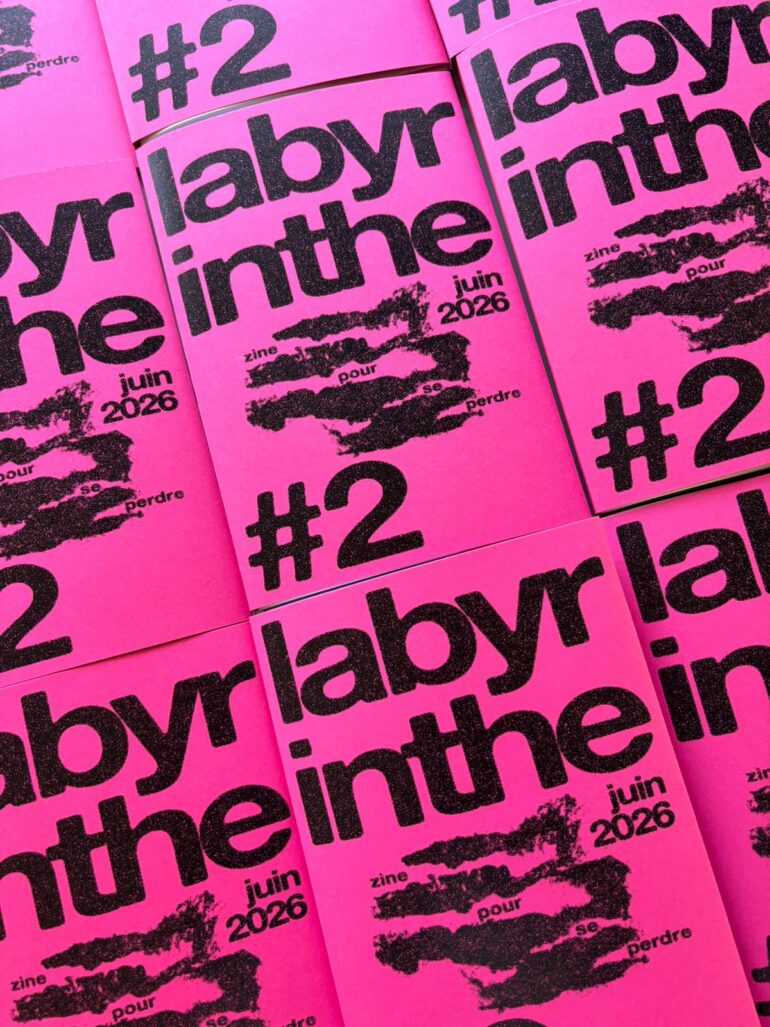
The magazine Labyrinthe released its latest issue on June 8: The Beautiful, the Raw, and the Living.

In 2023, a shared desire to create a space for expressing doubts, questions, and diverse perspectives gave rise to the “Labyrinthe” fanzine project, launched by a group of doctoral students at the ATE laboratory atENSA Normandie. This shared commitment to sharing and promoting an exploratory approach subsequently expanded, bringing together researchers, faculty, students, architects, and artists within this dynamic of critical engagement.

Following the first two issues, published in December 2023 and March 2025, this publishing project once again draws on the image of the labyrinth—a place of wandering or strolling, of hostility or refuge—symbolizing the reflective process that invites us to evolve and transform ourselves, both individually and collectively. This new issue invites us to explore the triad of the BEAUTIFUL, the RAW, and the LIVING, by questioning the boundaries of these categories, their implications, their synergies, and their contradictions.

The journals are available free of charge at the ENSA library.

***

Contents of Issue #2 – June 2026: Editorial / The Brutalist / Precious / A Weekend in Gravelines / Bonnibel’s Stroll / There Will Be Wood / The Motionless Giants / Fort du Haut Buc: A Hypothesis of Building with Living Things / Sky Journal: Celestial Correspondence

Editorial team: Antoine Apruzzese, Lucie Dehame, Alexis Desplats, Miléna Koutani, and Léna Tullifer.

With contributions from Miléna Koutani, Chloé Boudet, Bertrand Verney, Léna Tullifer, Espace Disponible, Mathilde Sigrist, Félix Cavadini, Mathis Joulin, Laure Brayer, and Claire Rosset

LINK TO THE FANZINE WEBSITE HERE

For further information: labyrinthe-zine@protonmail.com

Publication:
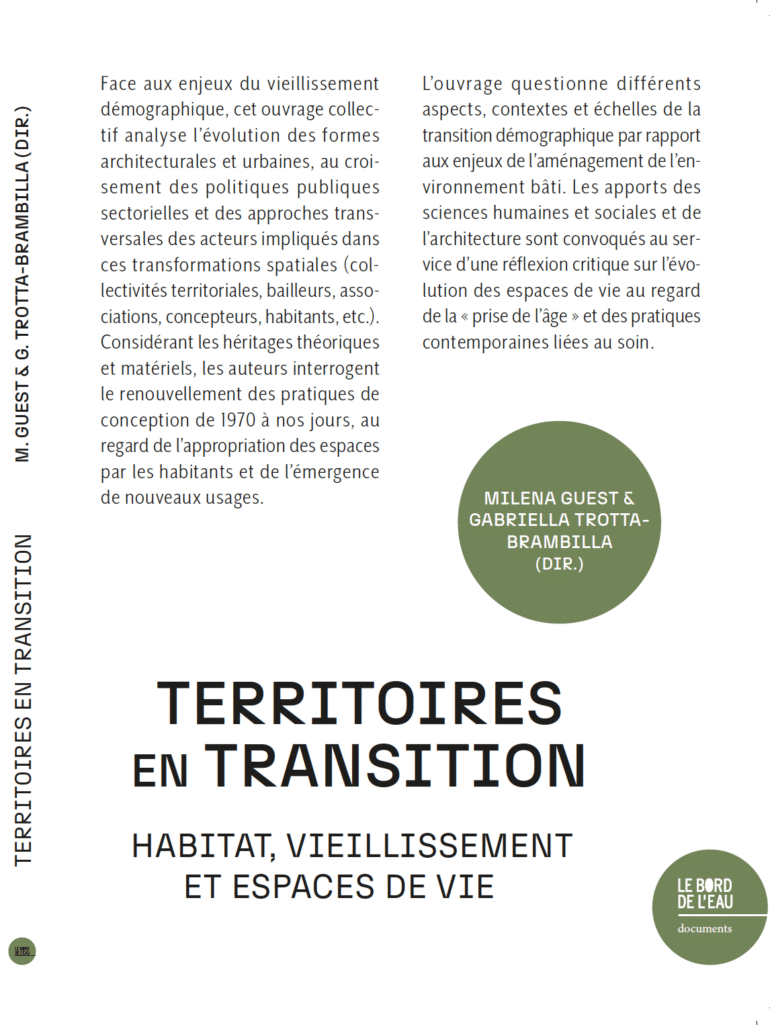
edited by Milena Guest and Gabriella Trotta-Brambilla

<i>Territoires en transition. Habitat, vieillissement et espaces de vie</i>

Le bord de l’eau Publishing and the ATE Laboratory are publishing the book Territoires en transition. Habitat, vieillissement et espaces de vie. This collective work stems from the symposium of the same name held in September 2023 atENSA Normandie.
The book is edited by Milena Guest and Gabriella Trotta-Brambilla , faculty members and researchers at the ATE laboratory.

Summary of the book 

In light of the challenges posed by an aging population, this collective work analyzes the evolution of architectural and urban forms at the intersection of sector-specific public policies and cross-cutting approaches adopted by the stakeholders involved in these spatial transformations (local governments, landlords, associations, designers, residents, etc.). Taking into account theoretical and material legacies, the authors examine the evolution of design practices from the 1970s to the present day, with regard to residents’ appropriation of spaces and the emergence of new uses.
The book examines various aspects, contexts, and scales of demographic transition in relation to the challenges of planning the built environment. Contributions from the humanities, social sciences, and architecture are drawn upon to foster a critical reflection on the evolution of living spaces in light of “aging” and contemporary care practices.

More information HERE
Link to the publisher's website

The publication of this book was made possible thanks to the support of the Ministry of Culture, the École nationale supérieure d’architecture de Normandie, the ATE laboratory, the Filseine Foundation, and the Union pour l’Habitat Social de Normandie.

Image: Cover of the book *Territoires en transition. Habitat, vieillissement et espaces de vie, 2026*

Publication:

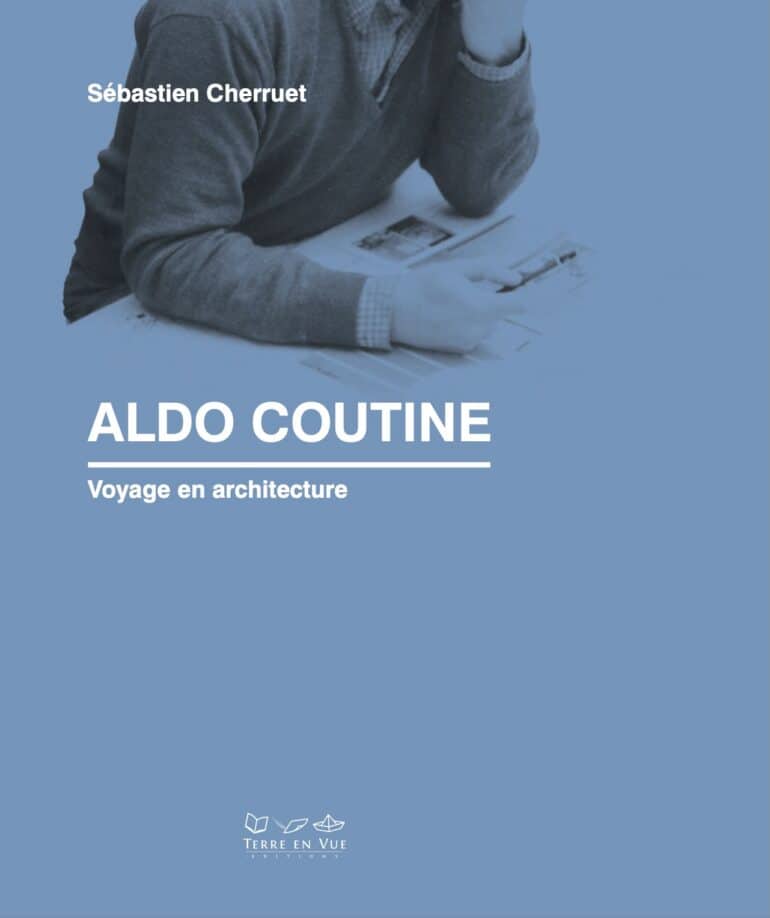
Sébastien Cherruet

<i>Aldo Coutine. Voyage en architecture</i>

Terre en vue publishers and the ATE laboratory are releasing the book Aldo Coutine. Voyage en architecture. This publication is the result of original research conducted by Sébastien Cherruet, a lecturer and researcher at the ATE laboratory.

The publication of this work was made possible by contributions from the Ministry of Culture and the ATE laboratory.

Summary of the book

A graduate of the Tucuman School of Architecture (Argentina), Aldo Coutine worked mainly in France from 1965 until the 2020s, completing a wide variety of projects: modernist towers during the Trente Glorieuses, urban developments and bioclimatic projects after the oil crises, and exceptional commissions such as the Le Mans courthouse. Beyond these singular achievements, Aldo Coutine's work offers a remarkable cross-section of 20th-century architectural history, marked by significant economic changes and a profound renewal of doctrines.

More information on the publisher's website

visual: cover of the book AldoCoutine. Voyage en architecture © Terre en vue publishing, 2025.

Publication:

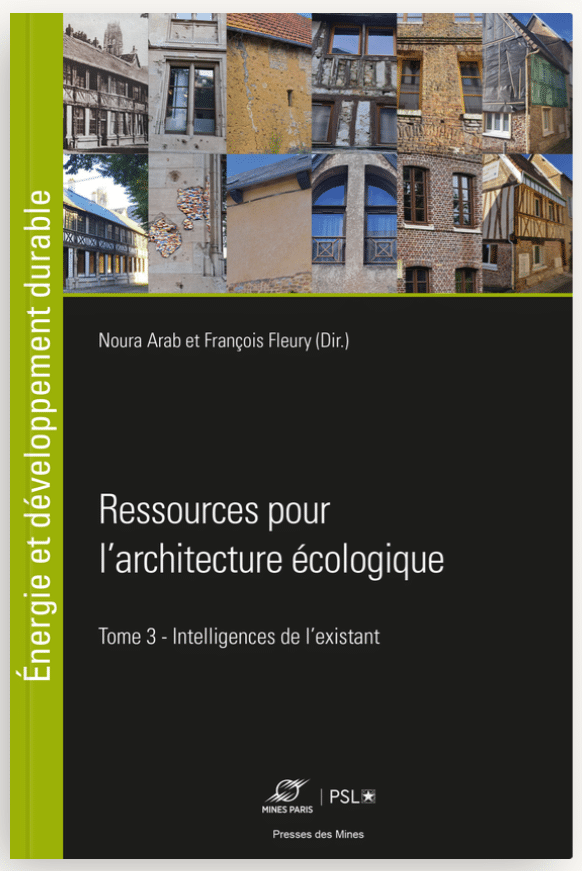
edited by Noura Arab and François Fleury

<i>Ressources pour l’architecture écologique. Tome 3, Intelligences de l’existant</i>

Les Presses des Mines, the École Nationale Supérieure d’Architecture de Normandie, the ATE laboratory, and the Chair in Renewable Natural Resources, Climate, and Architecture have published the book Resources for Ecological Architecture. Volume 3, Intelligences of the Existing. This collective work is the result of the seminar "The Existing, Architecture as a Resource," held in October 2024 atENSA Normandie. It concludes the cycle that began in 2022.
The book is edited by Noura Arab and François Fleury, professors and researchers at the ATE laboratory.

Summary of the book

Existing buildings are valuable for many reasons. In constructing them, men and women have invested their intelligence, their labor and their values. Their construction has polluted and consumed resources taken from nature. By inhabiting them, we have charged them with emotions, memory and landmarks. So is it still necessary to demolish in order to rebuild? How can we make the most of this exceptional resource?

This book, the third and final volume devoted to resources for ecological architecture, explores the way in which intervention on existing buildings is now the reference situation for thinking about the architecture of tomorrow. It shows the challenges and opportunities of a relationship with the existing that attributes new values to it, while being more attentive to its intrinsic qualities.

Researchers, educators, architects and engineers examine the implications of this posture for teaching, professional practice, territorial and regulatory strategy. The aim of this book is to bring together different viewpoints in order to question our models, provide inspiration and lay the foundations for an architecture that reappropriates its past creations as an essentially ecological posture.

View a PDF excerpt

The link to the publisher's website for the purchase of the book (printed version or digital version)

More information on the Renewable Natural Resources, Climate and Architecture Chair


visual: cover of Ressources pour l'architecture écologique. Tome 3, Intelligences de l'existant, Presses des Mines, 2025

Publication:

Fanzine

The desire to create a space in which every doubt, every question, and every sensitivity could become tangible gave rise two years ago to the "Labyrinthe" fanzine project by theENSA Normandie doctoral student collective. The shared desire to share and promote an exploratory approach has expanded, bringing together researchers, teachers, and artists in this dynamic of critical positioning.

This publishing project is once again based on the emblematic figure of the labyrinth, a place for wandering or strolling, hostility or refuge, symbolizing this reflexive process, and inviting us to evolve, to transform ourselves individually and collectively.

This issue invites us to explore a number of themes that all relate in different ways to the transformation of our reality: excess - or dis-measure, mutation and resilience.

***

Contents of issue #1 - March 2025: editorial / Labyrinths and video games / Measuring excess / I love you... / Staying a researcher, at what price? / Re-port or the bitter seven of Juvisy / Salle de fêtes / Their joy

Editorial team: Antoine Apruzzese, Lucie Dehame, Alexis Desplats, Miléna Koutani, Léna Tullifer

With contributions from Alexis Desplats, François Fleury, Nikolas Fouré, Miléna Koutani, Kacha Legrand, Léna Tullifer, Alix Turcq

LINK TO THE FANZINE WEBSITE HERE

Publication:

under the direction of Raphaël Labrunye

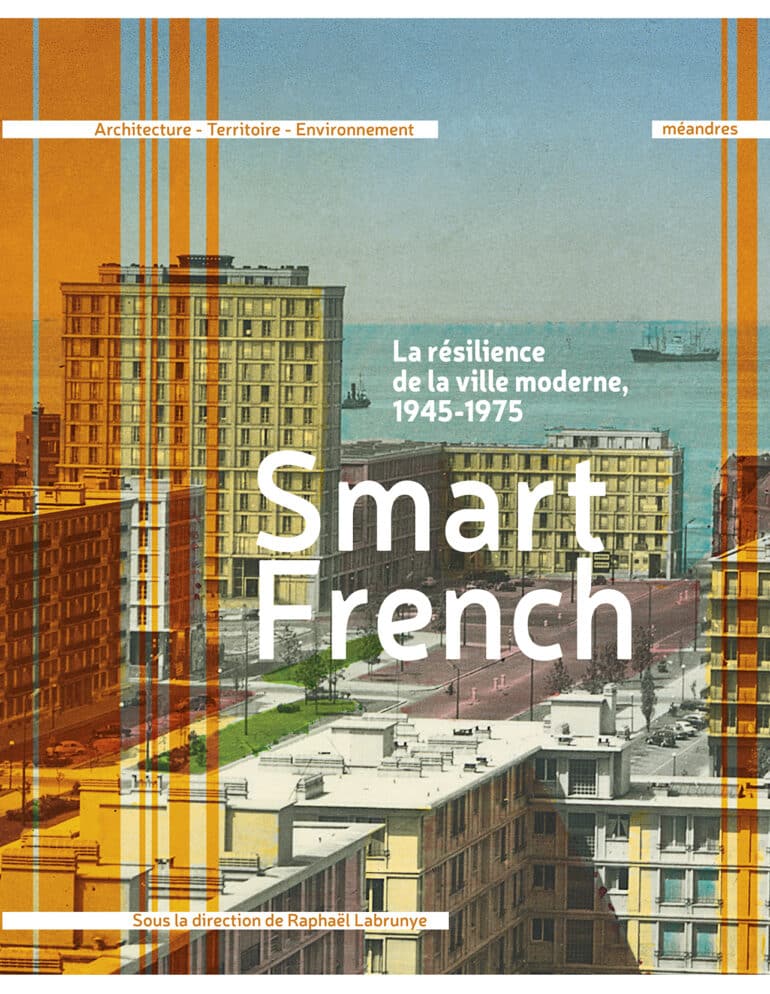
Smart French - The resilience of the modern city - 1945-1975

Les éditions des méandres and the ATE laboratory publish the book Smart French. The resilience of the modern city. 1945-1975.
This collective work is edited by Raphaël Labrunye, researcher at the ATE laboratory.

Summary of the book

The Smart French research project is based on the premise that the built in France between 1945 and 1975 possess under-appreciated architectural qualities, conducive to à environmental transition. It offers an alternative to global approaches, which are often disparaging, and to monographic studies, which are necessary but difficult to generalize. Given the the lack of statistical data on this architecture, the study focuses on à develop relevant indicators, à based on a corpus of nearly 300 operations, to describe criteria such as the daylighting and ventilation.

The analysis is based on data taken from contemporary architectural reviews of these and designers' speeches. Thanks à statistical methods, the aim is to identify architectural recurrences, in order to inform public intervention policies targeting these that take into account their specific architectural and environmental features.

Authors

Shahram Abadie
Gauthier Bolle
Karim El Alami
Margherita Ferrucci
Élise Guillerm
Amir Mahamoud Issa
Raphaël Labrunye
Ignacio Requena
Daniel Siret
Yannick Sutter

The publication of this book was made possible thanks to the support of the Ministry of Culture, PUCA, the Normandy Region, the ATE laboratory (ENSA Normandie), the Arts, Civilization, and History of Europe laboratory – Arche – UMR 3400 (ENSA Strasbourg), ENSA Clermont-Ferrant, and ENSA Brittany.

More information on the book HERE

visual: cover of Smart French, éditions des méandres, 2024

Publication:

under the direction of Valéry Didelon

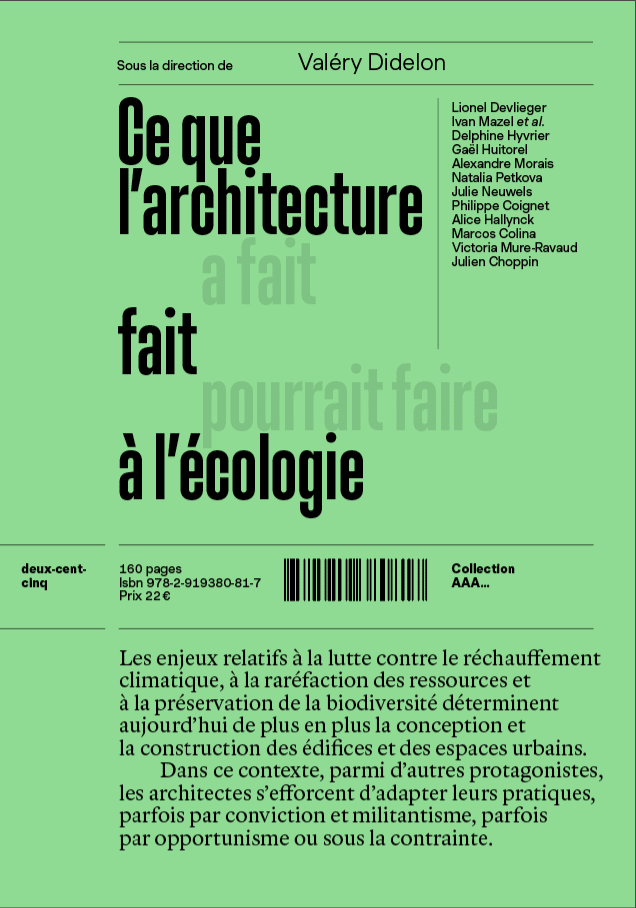
What architecture does for ecology

Editions 205, the École nationale supérieure d'architecture de Normandie and the ATE laboratory have published Ce que l'architecture fait à l'écologie.
This collective work is edited by Valéry Didelon, teacher-researcher at the ATE laboratory.

Summary of the book

As a counterpoint to the abundant existing literature on what ecology does to architecture, this book reverses the perspective and opens up a debate. The authors, both researchers and practitioners, examine the many ways in which those involved in the development of built spaces - architects, landscape architects, engineers, etc. - shape society's expectations in terms of the fight against climate change. - to shape society's expectations in the fight against climate change, resource depletion and the collapse of biodiversity. What architecture does to ecology shows that their practices and discourses determine the conditions of production of the built environment as much as they are determined by them. In this book, architecture is seen as one of the laboratories for inventing the techniques, aesthetics and, above all, ethics that can orient and guide collective action in the world to come.

Authors:
Lionel Devlieger, engineer-architect and historian
Julien Choppin, architect
Philippe Coignet and Alice Hallynck, architects
Marcos Colina, architect
Gaël Huitorel and Alexandre Morais, architects
Delphine Hyvrier, doctoral student and artist
Ivan Mazel, architect-urban planner and doctor of architecture,
and Marie Flécheux, Thierry Joffroy, Julien Nourdin, David Rodrigues-Soares, Yannick Sieffert
Victoria Mure-Ravaud, architect, researcher, teacher
Julie Neuwels, architect and PhD in the Art of Building and Urban Planning
Natalia Petkova, architect

View a PDF excerpt
Link to the publisher's website to purchase the book

visual: cover of Ce que l'architecture fait à l'écologie, éditions 205, 2024


edited by Noura Arab and François Fleury

<i>Ressources pour l’architecture écologique. Tome 3, Intelligences de l’existant</i>

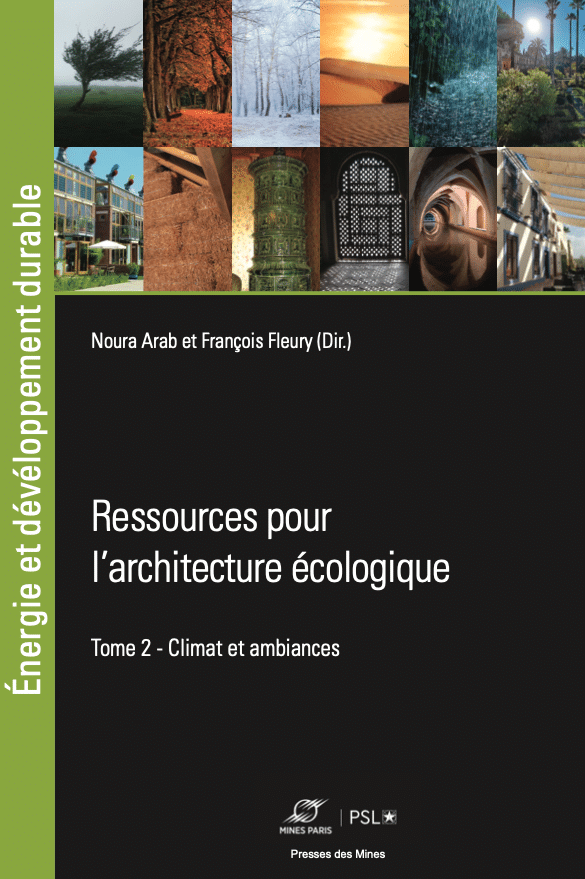
Les Presses des Mines, the École Nationale Supérieure d'Architecture de Normandie, the ATE laboratory, and the Chair of Renewable Natural Resources, Climate, and Architecture have published the book Resources for Ecological Architecture. Volume 2, Climate and Environments. This collective work is the result of the seminar "Climate , Environmental Resources in Architecture,"held in February 2023 atENSA Normandie.
The book is edited by Noura Arab and François Fleury, professors and researchers at the ATE laboratory.

Summary of the book
Since its beginnings, architecture has always been influenced by the climate, settling where it offered a favorable environment. But the climate is not only a resource for architecture, it is one of its raison d'être that has long shaped many of its characteristics. However, industrialization has not only standardized materials and construction methods, but also architectural forms and comfort, ignoring local climatic peculiarities. Fossil fuel consumption has been greatly increased, thus contributing to the global warming to which architecture must adapt today. Air conditioning is becoming more widespread, still consumes energy and contributes to increasing the urban heat island. How can we get out of this vicious circle?
It is time to rethink architecture as an interface between climate and atmosphere, by asking crucial questions in the face of the increasingly perceptible effects of climate change. This second volume on ecological architecture explores the consequences of the paradigm shift in considering the climate as a resource to be valued and no longer as a hazard from which we must protect ourselves.
It is crucial to put the climate context back at the heart of architectural design and encourage approaches that go beyond standardised environmental standards to ensure a sustainable and environmentally friendly lifestyle.

View a PDF excerpt

The link to the publisher's website for the purchase of the book (printed version or digital version)

visual: cover of Ressources pour l'architecture écologique. Tome 2, Climat et ambiances, Presses des Mines, 2024

Publication:

Carole Lemans

<i>Couverture et façade de chaume. De la ressource à la mise en œuvre</i>

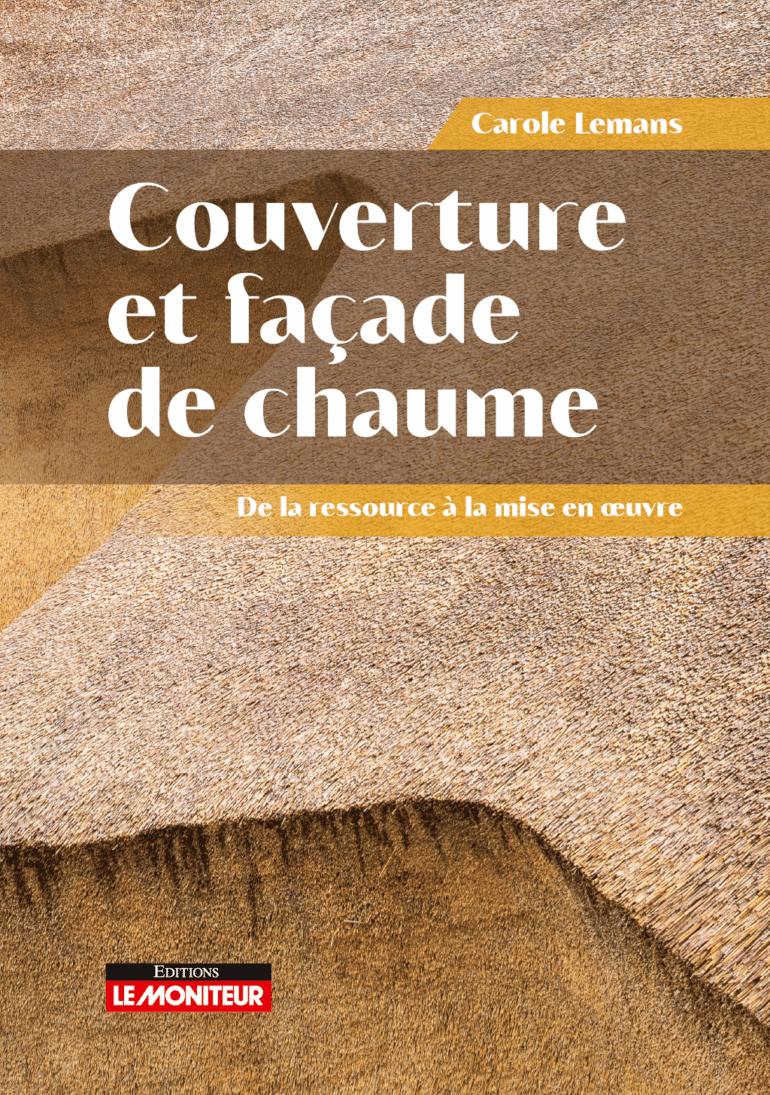
Le Moniteur publishes the book Thatch Roofing and Facades: From Resource to Implementation. This publication is based on the doctoral thesis defended by Carole Lemans, associate lecturer atENSA Normandie associate researcher at the ATE laboratory.

Summary of the book

Le chaume désigne tout à la fois le matériau, qu’il s’agisse de paille, de blé, de seigle, de roseau, et la technique de mise en œuvre utilisée. Aujourd’hui, l’intérêt pour le matériau est vivifié par le développement de la construction bas carbone.
Par ailleurs, depuis une vingtaine d’années, une production architecturale contemporaine de chaume émerge, en rupture avec l’expression traditionnelle de la chaumière ; elle s’exprime notamment par une utilisation du chaume en vêture verticale.
Ainsi, cet ouvrage illustré en couleurs présente l’architecture contemporaine de chaume, l’évolution de son utilisation, l’image qu’il véhicule aujourd’hui et les limites de la filière de production. Organisé autour de trois chapitres, cet ouvrage :
– présente les ressources françaises (roseau de Bretagne, de Normandie et de Camargue) ;
– décrit le processus de transformation de la production agricole à la botte livrable sur chantier, l’entreprise de récolte devant veiller sur plusieurs niveaux de qualité, comme la taille du roseau, son tri et son taux d’humidité ;
– détaille les techniques de fixation et alerte sur des points de vigilance
– expose les potentiels et les limites du chaume en France aujourd’hui, au travers du cadre réglementaire, des dégradations fongiques prématurées et de ses qualités écologiques
– présente les spécificités régionales par ouvrage particulier (égouts, faîtages, arêtiers, lucarnes, rives, etc.), éléments présentant aussi bien des enjeux constructifs que des supports d’expression.
– s’intéresse aux architectures contemporaines de chaume des climats de type océanique, en France, mais aussi aux Pays-Bas, où la production architecturale est riche et les savoir-faire spécifiques. Des exemples de vêture verticale en chaume sont fournis.L’ouvrage, portant à la fois sur la technique et l’esthétique du chaume, s’adresse donc tant aux artisan·es, aux architectes désireux de s’ouvrir à de nouvelles formes architecturales qu’aux particuliers intéressés par le matériau.

Book summary click HERE

To order the book on the Editions Le Moniteur website: https://boutique.lemoniteur.fr/author/carole-lemans.html

visual: cover of Couverture et façade de chaume, published by Le Moniteur, 2024

Publication:

Patrice Gourbin

<i>La reconstruction du bâti agricole dans le Calvados</i>

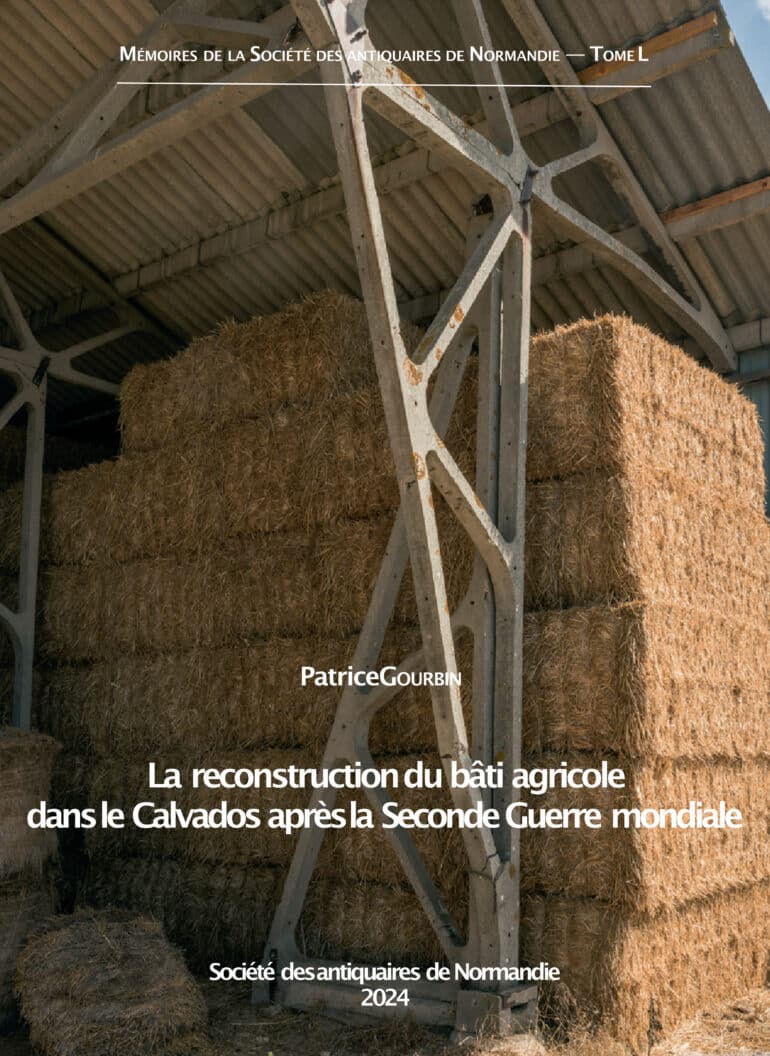
The Society of Antiquaries of Normandy and the ATE laboratory have published the book La reconstruction du bâti agricole dans le Calvados après la Seconde Guerre mondiale. This publication is the result of original research conducted by Patrice Gourbin, lecturer and researcher at the ATE laboratory.

The publication of the book was made possible by the contribution of the Ministry of Culture, the department of Calvados and the ATE laboratory.

Summary of the book

This book situates agricultural reconstruction in the Calvados département in the context of national debates. Beginning in the early 20th century with the notion of folklore, the debate took a very concrete turn during the Occupation, with a major study on the contribution of traditional architecture to agricultural modernization. At the time of the Liberation, Calvados was the worst-affected département in France in terms of agriculture, with almost 2,200 farms destroyed. Far from the reactionary propaganda of Vichy, the agricultural reconstruction of the département after the Liberation was carried out by the state according to a functionalist doctrine, and took on the aspect of "reasonable modernity" common to the whole of Reconstruction.
In Calvados, the Coopérative de reconstruction de l'Habitat rural (CRHR) was the driving force behind this policy. The transformation carried out during this period radically changed the landscape of agricultural architecture, separating the home from the farm and outsourcing product storage and processing. It was accompanied by a vast consolidation movement, and took place against a backdrop of accelerating modernization of farming practices, at a time when some were seeking to maintain "peasant agriculture" between collectivization and industrialization.
Today, the question of the future of this heritage is being raised, in the context of agricultural decline and suburbanization.


Visual: Cover of the book The reconstruction of agricultural buildings in Calvados after the Second World War, Society of Antiquaries of Normandy, 2024

Publication: